

✕
What issue are you experiencing?
Cracks, water intrusion, crawl space moisture, settlement, etc.
Cracks, water intrusion, crawl space moisture, settlement, etc.
Find out what could be causing problems in your home and what we recommend to fix it.
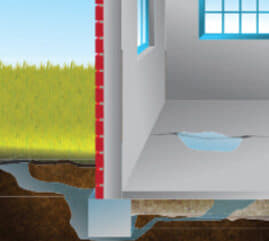
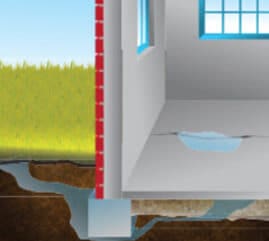
When water saturates the ground around your foundation, it applies pressure (called hydrostatic pressure) to create cracks in the concrete.
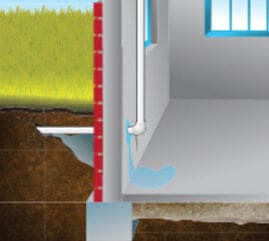
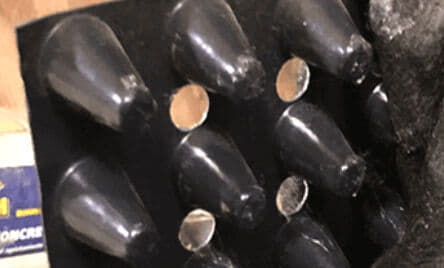
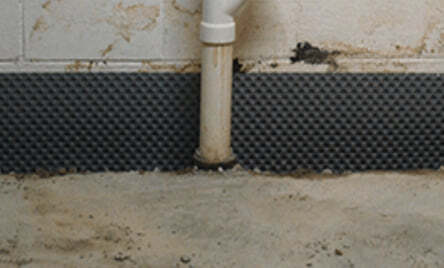
GeoChannel is ideal for crawl spaces. It can be placed on top of or next to the foundation footing. The fabric lining filters out soil and debris to prevent clogs and allows for optimal water flow.
Fast Track is a low-profile interior drainage channel set on or alongside the footing at the cove joint (where the wall meets the floor). It collects water from wall seepage, the cove joint, and under-slab migration, then routes it to a sump pump for safe discharge.

You can learn more about benefits, costs, and methods in our Library. A few suggestions: - Want to know more about how hydrostatic pressure develops, and what it does? - This article breaks down the different waterproofing methods we offer, along with their costs. - Not sure which waterproofing solution is the best fit for your home? We explain how your floor type ultimately determines this.
Acculevel Sales Director Nolan Beery answers: Do I need basement water drainage? Or take our entire Basement Waterproofing Course!
Your floor begins to slope or sag when the wooden flooring structure is compromised or damaged. The most likely cause is moisture in your crawl space.
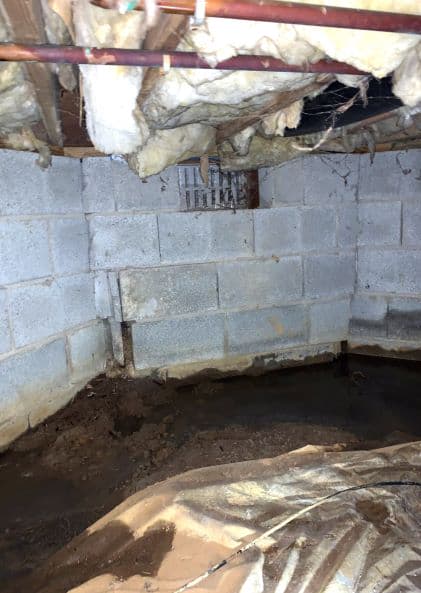
Because most crawl spaces do not have a floor, the exposed ground under your home allows water, insects, and other vapors to enter the crawl space.
Fiberglass insulation is often an additional issue, because it absorbs moisture. Most older homes have fiberglass insulation installed between floor joists and beams. Damp insulation means damp wooden floor components.
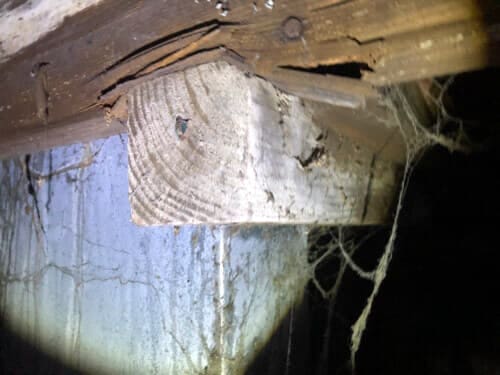
Damp wood will rot, sag, and deteriorate. It will also grow mold and provide an ideal “home” for insects like termites. All of these issues increase the rate and severity of damage to your floor.
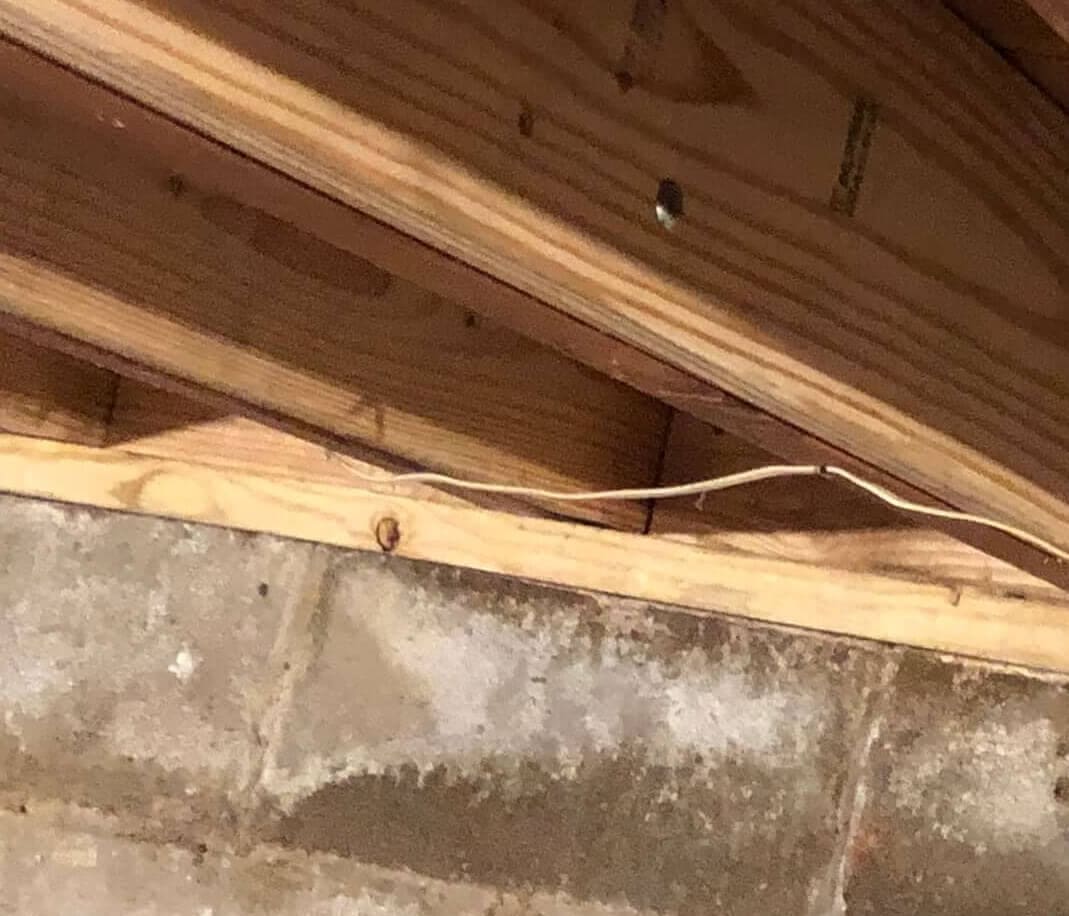
Does your floor have high and low places in it? This indicates you have damaged joists. If your flooring slopes towards an outside wall, that’s probably a failing sill plate or band board. If you’re seeing one of these conditions, your damaged components need to be repaired. Depending on the extent of damage and type of support, they need to be either reinforced or replaced.
If your floor is sloping towards the center of your home, this indicates an issue with the main beam. When the center beam is weakened or failing, it needs to be replaced by a steel beam. If your beam is solid? The support columns below the beam may be the issue. In this case, those should be replaced with adjustable floor jacks
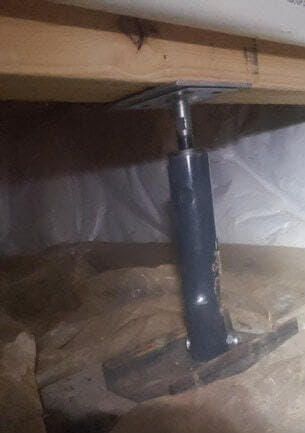
You can learn more about causes, repair methods, and costs in our Library. A few suggestions: -What’s causing your floor to sag? Discover all of the possibilities. -This article gives a detailed review of the flooring components, how they’re repaired, and what they cost. -These are the most frequently asked questions (and answers) from homeowners about sagging floors.
Nolan Beery, our Sales Director, explores the ins & outs of crawl space repair.
If your foundation is settling, it could make your doors or windows stick. All foundations settle, but sometimes portions of the foundation sink at different rates. When this happens, entryways become hard to open, or won’t stay closed. These are tell-tale signs your foundation is settling unevenly.
When the foundation is unlevel, your home’s structure is pulled in opposing directions. Building components like wooden beams and concrete walls are not designed to bend or stretch- so they begin to twist or warp.
As the wooden components of your home warp, they move the window and door frames. Once the frame shifts in place, it prevents your door or window from moving smoothly. Another sign is cracking in the drywall around these sticking doors and windows.

Helical piers are steel posts that hold your foundation stable and secure. Piers are screwed into the ground outside of your home until they reach stable, undisturbed soil. Once installed to the proper depth, the piers are attached to the foundation with brackets.
-The most common causes of uneven settling are soil erosion and poor soil compaction. -To solve your issue, you’ll need to install helical piers. Helical pier pricing will vary, depending on the number required, the installation method, and the depth needed to gain stability. -Some contractors use push piers instead of helical piers. We have installed both, and have determined helical piers are a better choice for residential properties.

Sales Director Nolan Beery explores if helical piers are the right fit for your situation. You can also watch our full playlist on our YouTube Channel.
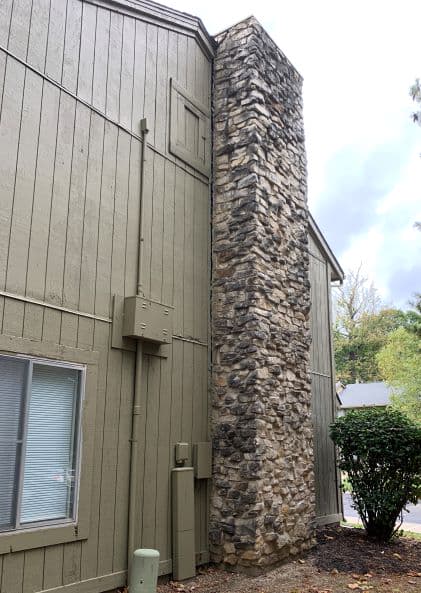
A chimney begins to lean when its foundation is settling at a different rate than the house’s foundation.
In most cases, a chimney is built on a foundation that is separate -but connected- to the house’s foundation.
A chimney is a heavy structure, built out of brick or stone. Because it’s a significant amount of weight in a small footprint, your chimney often settles faster than your house does. When this happens, the connection between the foundations is strained, and can crack or separate.
Once the chimney is no longer securely anchored to your home, it begins to lean. This is when a gap can form between your chimney and house, allowing drafts and water to intrude.
Helical piers are steel posts that hold your foundation stable and secure. Piers are screwed into the ground outside of your home until they reach stable, undisturbed soil. Once installed to the proper depth, the piers are attached to the foundation with brackets.
-The most common causes of uneven settling are soil erosion and poor soil compaction. -To solve your issue, you’ll need to install helical piers. Helical pier pricing will vary, depending on the number required, the installation method, and the depth needed to gain stability. -Some contractors use push piers instead of helical piers. We have installed both, and have determined helical piers are a better choice for residential properties.
Sales Director Nolan Beery explores if helical piers are the right fit for your situation. You can also watch our full playlist on our YouTube Channel.
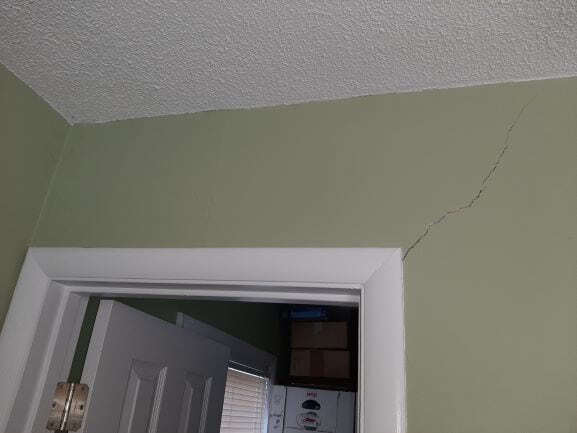
If your foundation is settling, it can create cracks in the drywall. All foundations settle, but sometimes portions of the foundation sink at different rates. When this happens, cracks develop- especially around doors and windows. These are tell-tale signs your foundation is settling unevenly.
When the foundation is unlevel, your home’s structure is pulled in opposing directions. Building components like wooden beams and concrete walls are not designed to bend or stretch- so they begin to twist or warp.
As the wooden components of your home warp, they move the framing of the house. Drywall is not flexible; it will not bend or twist.
Another sign of settling is sticking doors and windows. You can test for this yourself:
1. Open the window nearest the developing crack. If it’s hard to open or won’t stay open, you have a settling problem.
2. If there’s a door close to the crack, test this also. A sticking door may not close or it may not stay closed without being locked.
Helical piers are steel posts that hold your foundation stable and secure. Piers are screwed into the ground outside of your home until they reach stable, undisturbed soil. Once installed to the proper depth, the piers are attached to the foundation with brackets.
-The most common causes of uneven settling are soil erosion and poor soil compaction. -To solve your issue, you’ll need to install helical piers. Helical pier pricing will vary, depending on the number required, the installation method, and the depth needed to gain stability. -Some contractors use push piers instead of helical piers. We have installed both, and have determined helical piers are a better choice for residential properties.
Sales Director Nolan Beery explores if helical piers are the right fit for your situation. You can also watch our full playlist on our YouTube Channel.
When water saturates the ground around your foundation, it applies pressure (called hydrostatic pressure) that creates cracks in your concrete.
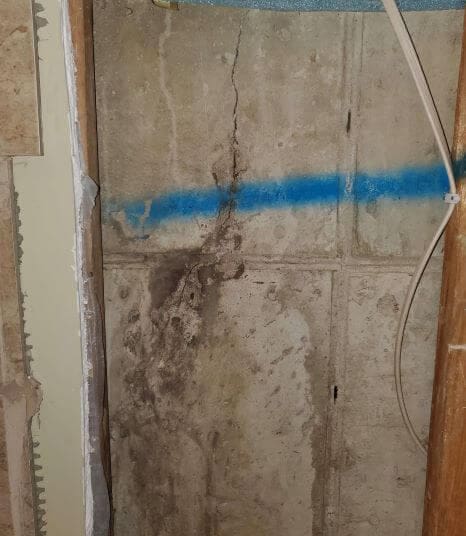
These cracks often start off very thin, as hairline cracks. These cracks may include water intrusion, but not always.
But once a crack forms, it creates a weak spot that widens each time the hydrostatic pressure pushes on it.
If cracks are left untreated, they expand or multiply.
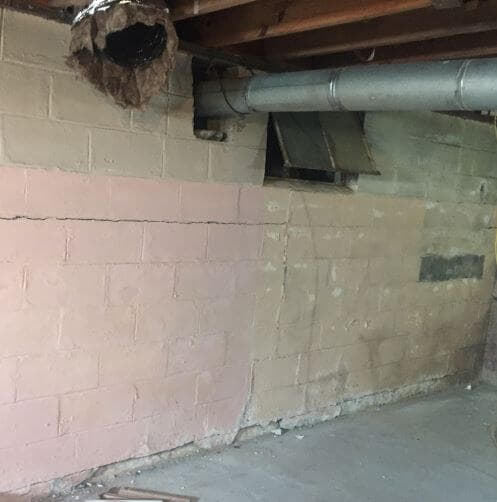
When the foundation wall weakens enough, it develops a break. This looks like a long horizontal crack in a poured concrete wall.
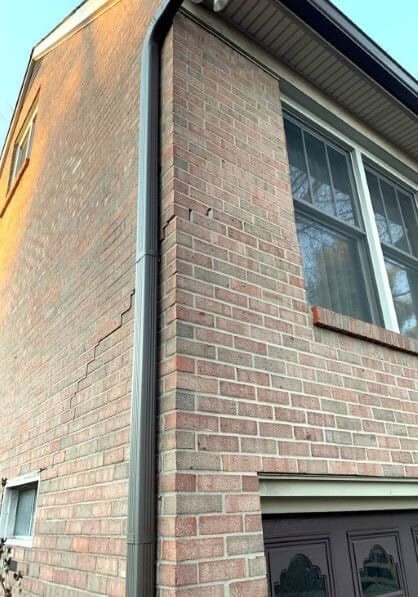
If your foundation is made of concrete blocks, this type of crack can also resemble a staircase.
If you see these larger cracks it’s an indication that your foundation is beginning to bow or move inward
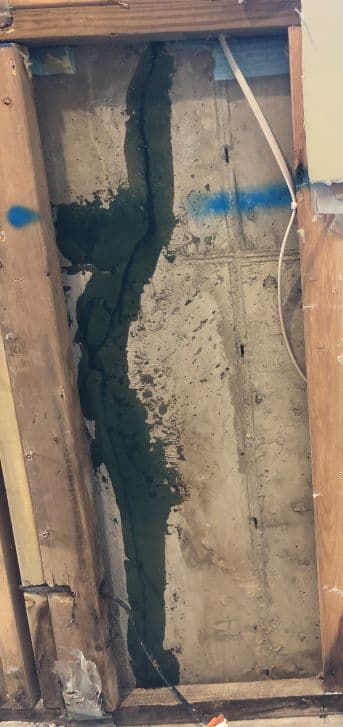
For smaller cracks, we use an epoxy fill repair. This stops water leakage, and the repair can be painted over to match the rest of the wall. Depending on the severity of the crack, we may need to repair the crack from the inside and the outside of the foundation.
If your wall is developing long horizontal cracks or stair-step cracks, we typically recommend carbon fiber straps. If your wall is bowing more than 2 inches, you’ll need helical tiebacks or wall anchors instead. The goal of these repairs is to secure the wall and restore stability to your home.
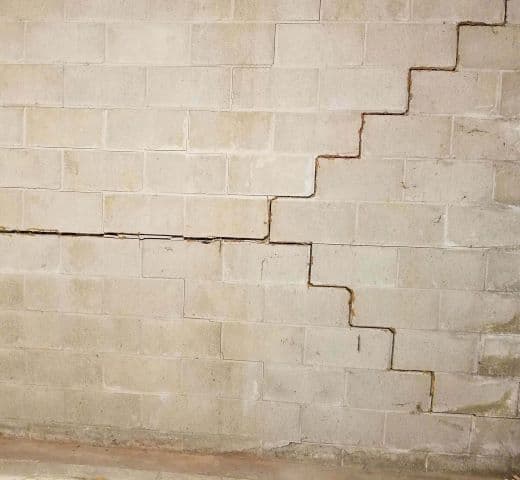
- There are 3 major crack types, and we discuss the significance of each. - Cracks in the brick exterior of your home aren’t always a foundation concern. - Are the lintels above your doors or windows causing cracks? We talk about how lintels rust in this blog.
Acculevel’s Director of Sales explains carbon fiber straps, when to use them, and what they cost. You can also watch Nolan demonstrate the strength of carbon fiber straps.

Biological growth can show up in anyone’s home- old, new, basement, crawl space... All it needs is a bit of moisture. You may smell it before you see it; a musty or earthy smell is a common sign of biological growth.
Mold, mildew, bacteria, and other biological growth are all by-products of a wet basement or crawl space. These organisms are everywhere in our environment, and can enter your home on your shoes, gym bag, or even through a draft in your foundation.
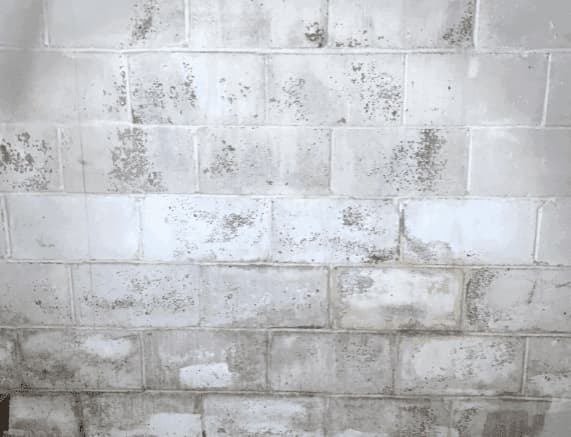
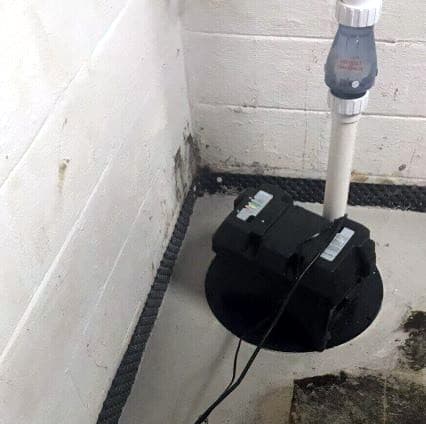
Waterproofing your basement or crawl space is the first step. You need to manage any water getting into your home. This starts with water drainage and a sump pump.
We use Anabec products in our treatment of biological growth. Their products are designed to complete the job with the smallest impact on your home and its surroundings.
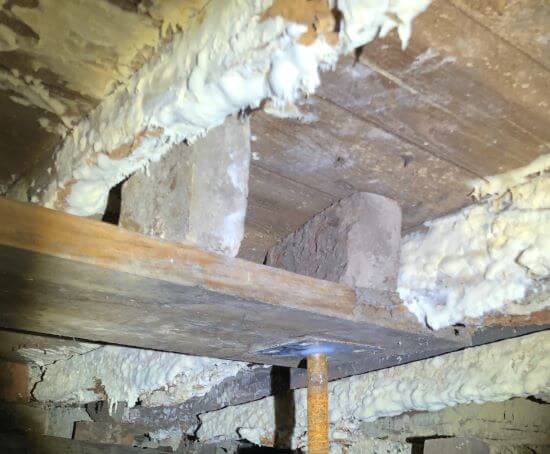
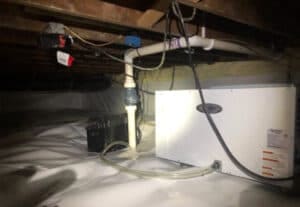
Encapsulation prevents both moisture and biological growth from damaging your home’s air quality. It can also blocks drafts and improve your HVAC performance.
Go to our Learning Center to learn more! A few suggestions: Find out how dangerous mold and bacteria can be to your family. Get the details on costs and options for treatment. Or determine which waterproofing option is best for you.

Sales Director Nolan Beery discusses biological growth, and if it’s a good option to DIY.
Biological growth can show up in anyone’s home- old, new, basement, crawl space... All it needs is a bit of moisture. You may smell it before you see it; a musty or earthy smell is a common sign of biological growth.
Mold, mildew, bacteria, and other biological growth are all by-products of a wet basement or crawl space. These organisms are everywhere in our environment, and can enter your home on your shoes, gym bag, or even through a draft in your foundation.
Waterproofing your basement or crawl space is the first step. You need to manage any water getting into your home. This starts with water drainage and a sump pump.
We use Anabec products in our treatment of biological growth. Their products are designed to complete the job with the smallest impact on your home and its surroundings.
Encapsulation prevents both moisture and biological growth from damaging your home’s air quality. It can also blocks drafts and improve your HVAC performance.
Go to our Learning Center to learn more! A few suggestions: Find out how dangerous mold and bacteria can be to your family. Get the details on costs and options for treatment. Or determine which waterproofing option is best for you.
Sales Director Nolan Beery discusses biological growth, and if it’s a good option to DIY.
Like all machinery, your heating and cooling systems need regular maintenance. But there are conditions within our homes that can interfere with good HVAC performance.
Air conditioning functions by removing heat and moisture from the air. This means damp air takes more energy to cool; so your HVAC system has to work harder for the desired results.
Drafts that let in outside air interfere with the temperature settings you’ve chosen. If your insulation is inadequate (or is falling down), your HVAC will have to run more often to maintain temperature.
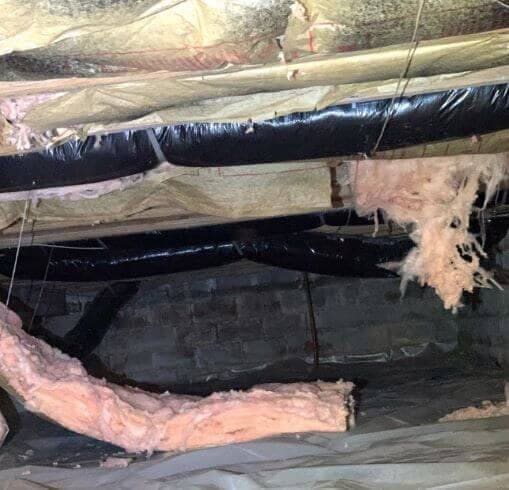
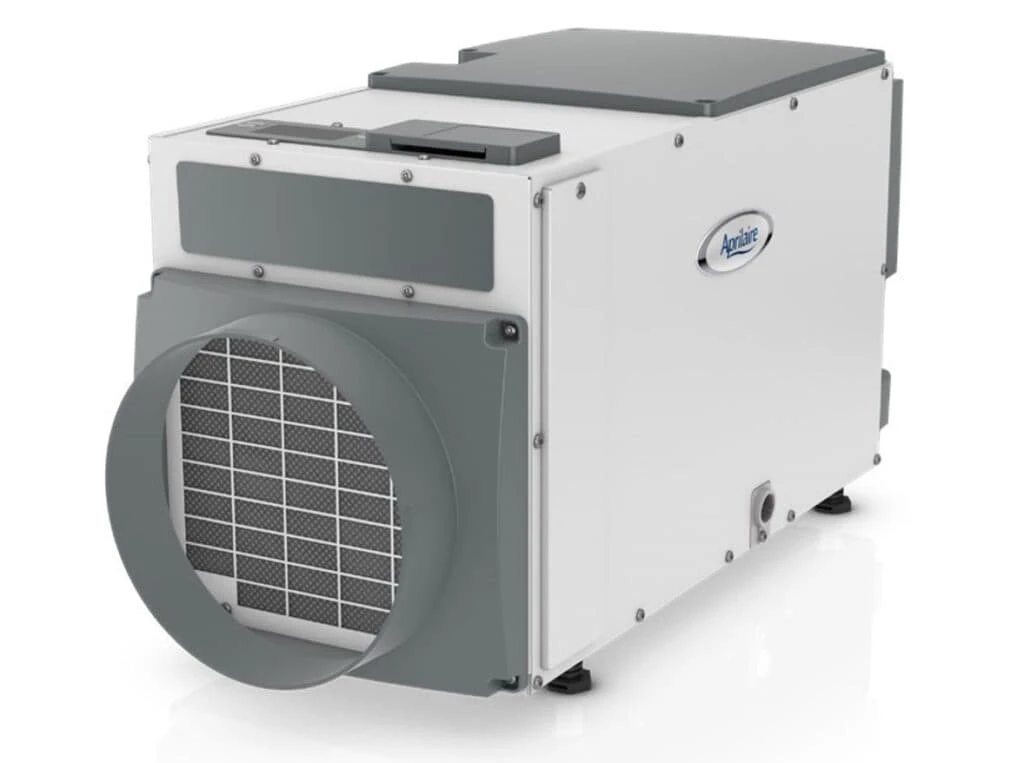
A whole-home dehumidifier gives you the ability to set and maintain a consistent humidity level in your home. A humidity level of 50% can reduce- or eliminate- viruses, bacteria, mold spores, and pollen. It also reduces the workload for your HVAC system; drier air is easier to cool.
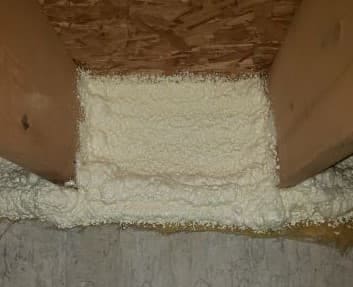
Spray foam insulation thoroughly blocks air flow from the outside, repels moisture, and has a “life” expectancy of 80+ years. It also adheres to the surfaces it’s sprayed on, unlike fiberglass batting which can (and does!) fall down.
Encapsulation prevents both moisture and biological growth from damaging your home’s air quality. It can also blocks drafts and improve your HVAC performance.
Go to our Learning Center to learn more! A few suggestions: we detail 10 ways you can improve your HVAC performance. Get the details about spray foam and its benefits. Learn why we encourage everyone to invest in a quality dehumidifier.

Sales Director Nolan Beery discusses the value of spray foam, among many other topics on our YouTube Channel.
All foundations settle, but sometimes portions of the foundation sink at different rates. This causes your home’s structure to pull in opposing directions. Building components like wooden beams and concrete walls are not designed to bend or stretch- so they begin to twist or warp.
Inside Your Home: you may see cracks forming in the drywall across your ceiling, or in the walls around windows and doors. Not sure if the cracks are superficial or settling? Open and close the doors or windows in the room with the cracks. If the doors/windows "stick" and are hard to move, this is a sign your foundation is settling.
Outside Your Home: you may see cracks in the foundation, especially near the windows that are difficult to open or close.
Helical piers are steel posts that hold your foundation stable and secure. Piers are screwed into the ground outside of your home until they reach stable, undisturbed soil. Once installed to the proper depth, the piers are attached to the foundation with brackets.
-The most common causes of uneven settling are soil erosion and poor soil compaction. -To solve your issue, you’ll need to install helical piers. Helical pier pricing will vary, depending on the number required, the installation method, and the depth needed to gain stability. -Some contractors use push piers instead of helical piers. We have installed both, and have determined helical piers are a better choice for residential properties.
Sales Director Nolan Beery explores if helical piers are the right fit for your situation. You can also watch our full playlist on our YouTube Channel.
Concrete slabs are a universal housing component: every home has at least one or two! They can be porches, patios, driveways, sidewalks, or rooms in a home with a slab foundation.
If you have an uneven or cracked concrete slab, it’s probably because the soil beneath it has shifted. Once a portion of the concrete is no longer resting on solid ground, it begins to lean or slope. This eventually causes the concrete to crack.
Cracked and uneven concrete can be a trip hazard. Uneven slabs can collect rainwater or direct it towards your home, creating foundation issues and water intrusion.
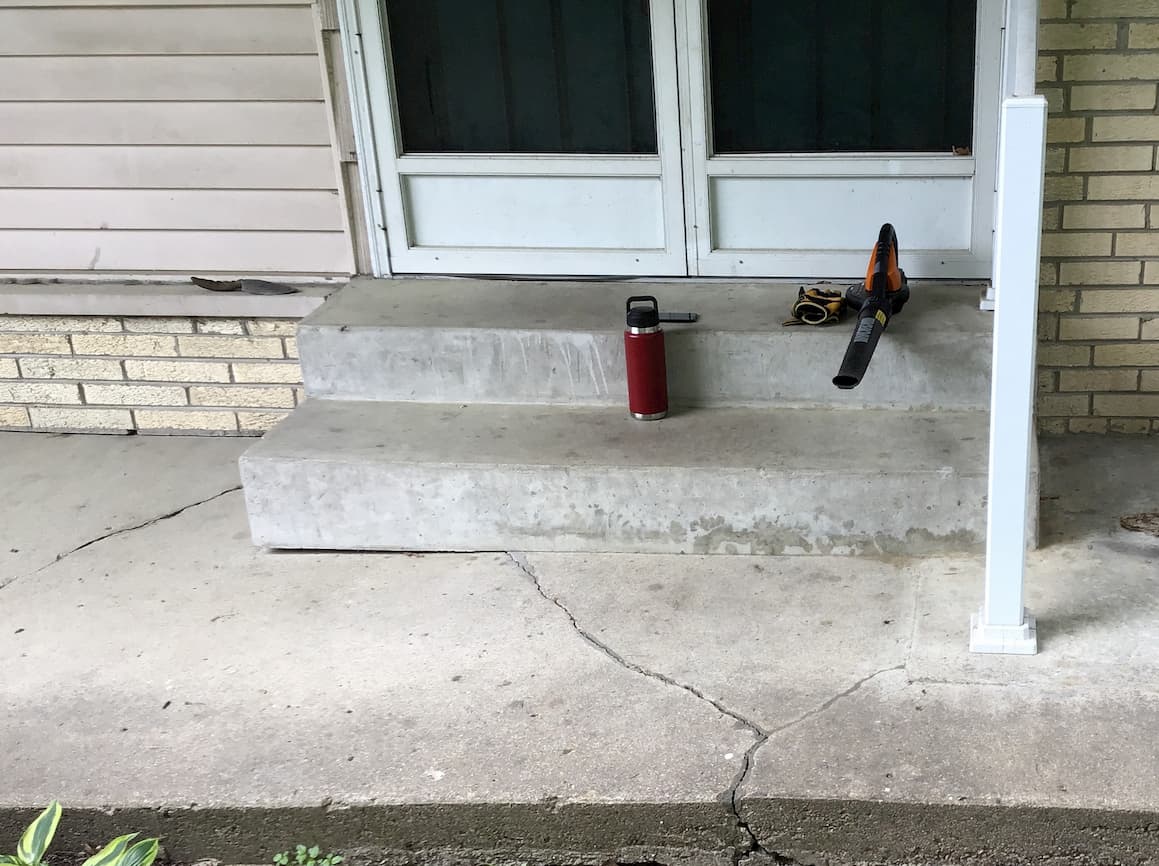
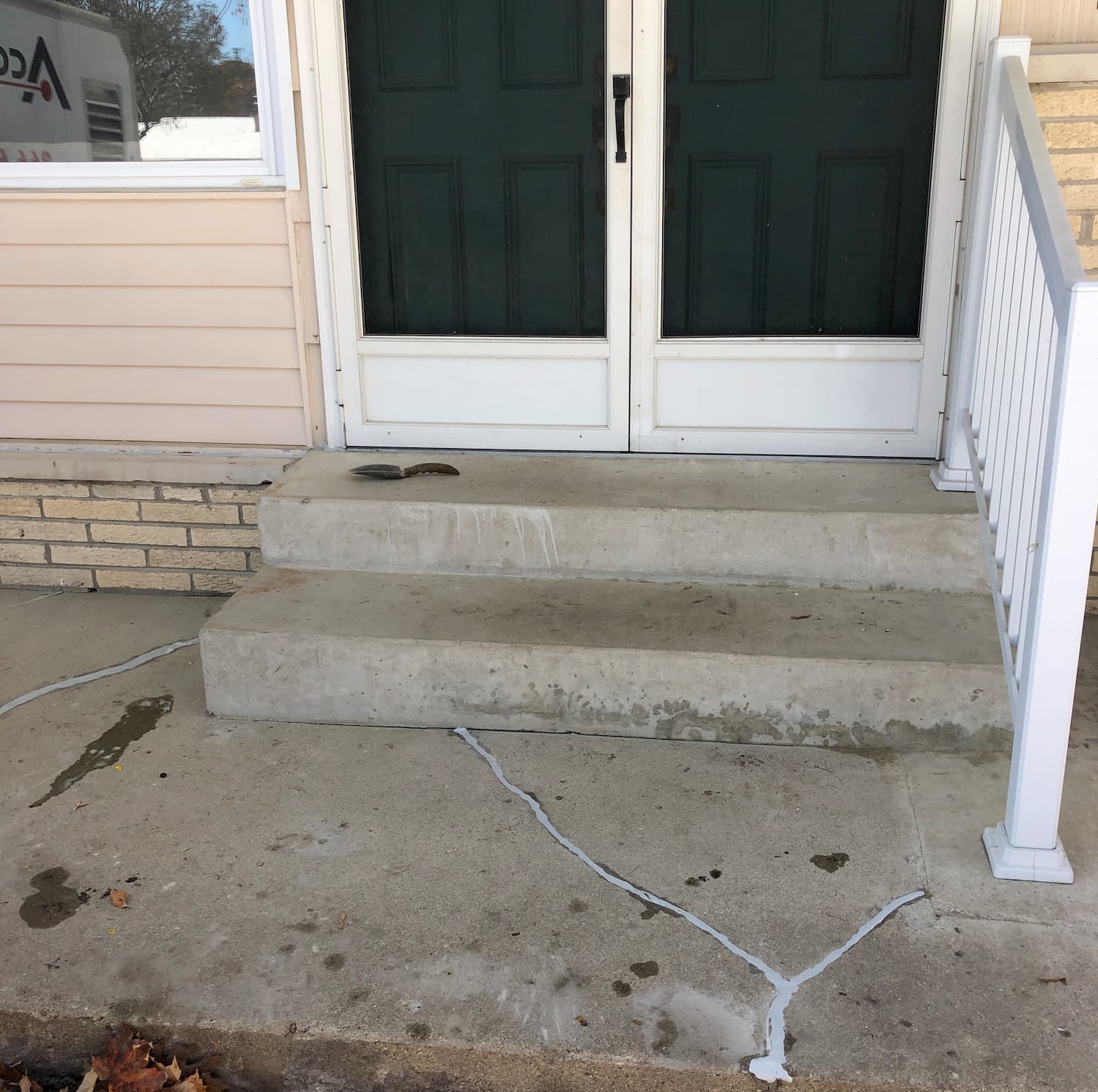
Slabjacking is a minimally-invasive concrete lifting process. Small holes are drilled through the concrete, and lifting material is injected under the slab. The filler material used in slabjacking is a polyurethane foam. As it is injected under the slab, it foams up, lifting the slab back into position. This foam product is environmentally safe, sets up almost immediately, and in most cases is a permanent solution.
Go to our Learning Center to find out more! You can compare different concrete repair methods. Estimate what it would cost to repair your cracked or sinking slab. We even have an illustrated guide that shows when slabjacking isn’t a good repair option.

Sales Director Nolan Beery describes the slabjacking process, along with all the other repair services and products that we offer
Concrete slabs are a universal housing component: every home has at least one or two! They can be porches, patios, driveways, sidewalks, or rooms in a home with a slab foundation.
If you have an uneven or cracked concrete slab, it’s probably because the soil beneath it has shifted. Once a portion of the concrete is no longer resting on solid ground, it begins to lean or slope. This eventually causes the concrete to crack.
Cracked and uneven concrete can be a trip hazard. Uneven slabs can collect rainwater or direct it towards your home, creating foundation issues and water intrusion.
Slabjacking is a minimally-invasive concrete lifting process. Small holes are drilled through the concrete, and lifting material is injected under the slab. The filler material used in slabjacking is a polyurethane foam. As it is injected under the slab, it foams up, lifting the slab back into position. This foam product is environmentally safe, sets up almost immediately, and in most cases is a permanent solution.
Go to our Learning Center to find out more! You can compare different concrete repair methods. Estimate what it would cost to repair your cracked or sinking slab. We even have an illustrated guide that shows when slabjacking isn’t a good repair option.
Sales Director Nolan Beery describes the slabjacking process, along with all the other repair services and products that we offer
If you are planning to finish your basement, you should install an egress window. This provides a secondary exit that can be used in case of fire or other emergencies.
International Building Codes mandate that every bedroom should have two exits, in case of emergency.
For a basement bedroom, the first is the stairway up to the main floor. The second needs to be an exit (egress) window.
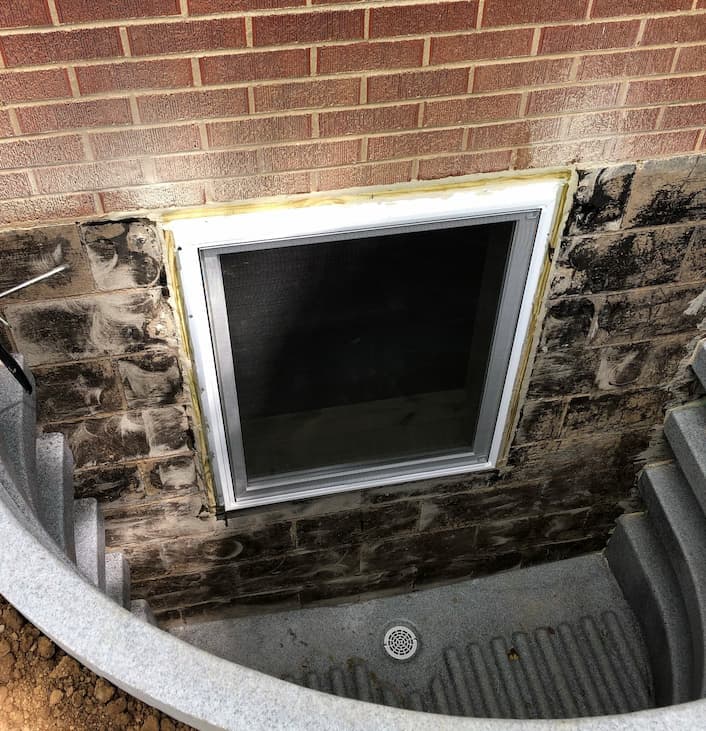
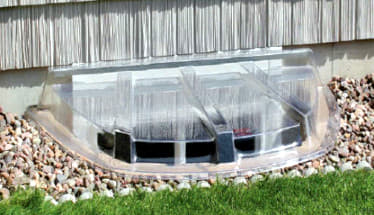
A well-installed egress window can increase the natural light that enters your basement. It can also allow you to add resale value to your home, by increasing the livable square footage.
We walk you through how Acculevel installs an egress window, step by step. Ready to install an egress window, but need to check your budget? We review the costs for you, also.

Acculevel Sales Director Nolan Beery reviews when your basement needs an egress window.