✕
What issue are you experiencing?
Cracks, water intrusion, crawl space moisture, settlement, etc.
Cracks, water intrusion, crawl space moisture, settlement, etc.

If you’ve ever read any articles about spring cleaning, you’re probably familiar with the stereotypical suggestions: organize your books by color! Throw out anything that doesn't bring you joy! Make your own cleaning solutions out of household items!
This guide is different. We don’t want to tell you how to store old holiday decorations, or to scrub your basement walls with vinegar (yes, it’s a natural disinfectant, but who wants their home to smell like that!). We want to help you detect any developing problems with your unfinished basement.
Acculevel is a family-owned and operated business that specializes in basement waterproofing and foundation repair. Andy Beery founded the company in 1996, and in the 20+ years since, we’ve helped more than 35,000 homeowners repair, preserve, and protect their homes for the future.
By combining your traditional spring cleaning with some tasks from our DIY Home Inspection Checklist, we’re going to help you find signs of brewing trouble before they become major repair expenses.
As you move through your basement, you should keep an eye on what’s above you. The flooring structure above you should consist of clean and dry lumber, from the floor joists to the subfloor.
If you see any abnormalities, you should get a ladder and take a closer look.
If you find conditions that concern you, mark the board with a piece of chalk or colored tape. This will help you easily find the sections again later. At the end of your cleaning spree, you’ll want to revisit any noted concerns to determine if you need a professional assessment.
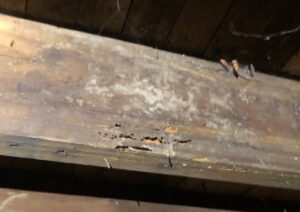
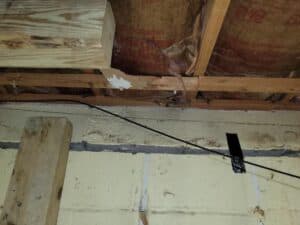
This photo was taken by an Acculevel project advisor during an in-home assessment. You can see the floor joists are decaying, and showing signs of mold (discoloration).
There’s some overlap between warning signs on your basement walls and floor. In both instances, you need to look at every crack with a critical eye.
A few super-thin (our industry calls them hairline) cracks are to be expected. Here in the midwest, seasonal changes in weather can affect home foundations. Freezing and thawing causes concrete to expand and contract; these tiny cracks are a natural side effect. But there are other kinds of cracks that you need to be concerned about:
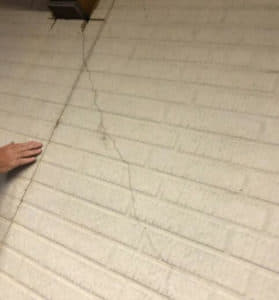
This photo was taken by an Acculevel project advisor during a free in-home assessment. This crack is a hairline at one end, but widens as it moves up the wall.
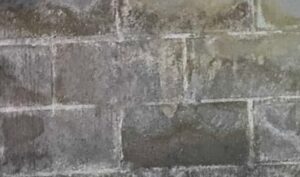
This photo was also taken by an Acculeve project advisor. The discoloration on this concrete wall is efflorescence.
Another photo taken by an Acculevel project advisor: this cracked and bowing wall needs to be straightened and reinforced.
As we indicated earlier, the search parameters for the floor are similar to your walls: cracks and water intrusion are definitely on the list:
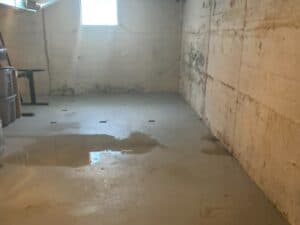
In this photo (taken by an Acculevel project advisor), water is seeping into the basement at the cove joint.
Throughout this article, we’ve provided links to related articles that go into greater detail about each topic. If you would like additional information, please use our free diagnostic tool that breaks down symptoms by common complaints:

If you live within our service area, please give Acculevel a call or complete our online form. We will schedule an in-home appointment with one of our knowledgeable and experienced project advisors.
They will discuss the symptoms you’ve noticed, and what plans you might have for your basement (Storage? A home office? Mother-in-law suite?). Your project advisor will evaluate your entire home, to gain a clear understanding of any potential problems. Acculevel’s goal is to always provide you with a whole-home solution, a plan that addresses the symptoms and the underlying causes that threaten your house’s health.
As a team, you and your project advisor will determine the best way forward, to protect and preserve your home for years to come.
[DISPLAY_ULTIMATE_SOCIAL_ICONS]