✕
What issue are you experiencing?
Cracks, water intrusion, crawl space moisture, settlement, etc.
Cracks, water intrusion, crawl space moisture, settlement, etc.
Are your walls bowed or cracked, your chimney leaning, or foundation settling? We can help with our foundation repair services. Since 1996, we’ve helped more than 35,000 homeowners restore stability and value to their greatest investment- their home.
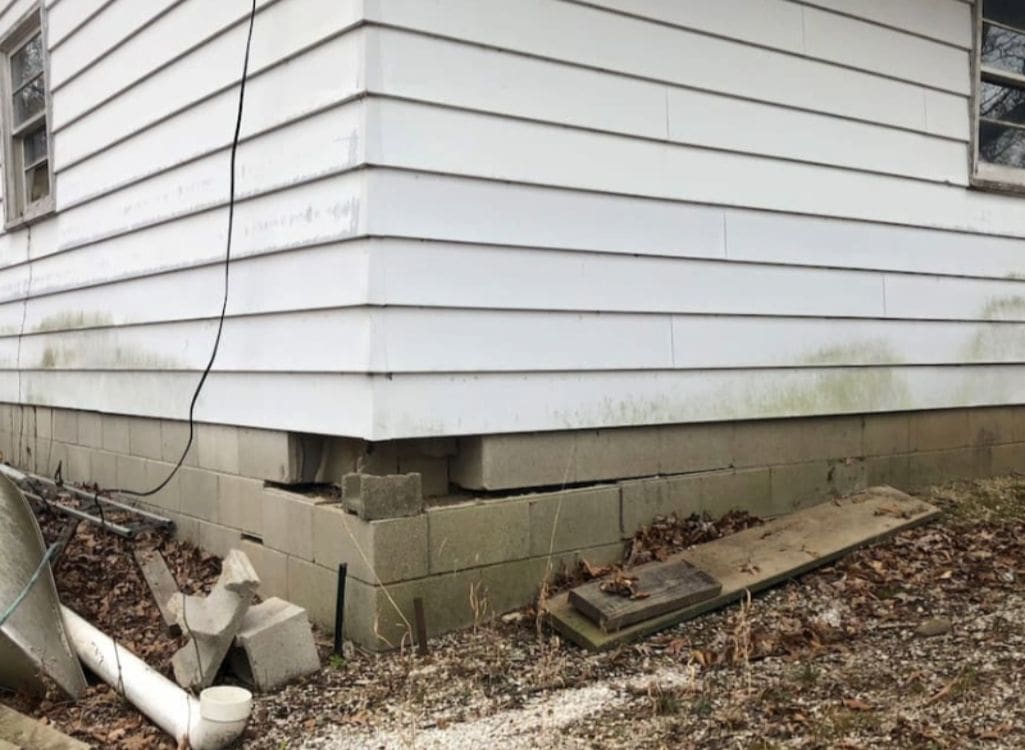
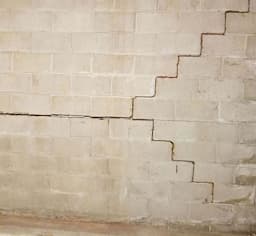
Heavy rainfall or melting snow can cause basement leaks and flooding which result in weakness in the ground beneath your foundation. Foundation sinking, bowing basement walls, and other structural damage can occur as the supporting ground softens. In the process, you’re left with an ideal environment for the growth of mold and mildew.
Acculevel offers a variety of solutions for bowing or cracked basement walls: carbon fiber straps helical, wall anchors, or tiebacks. No matter how far the wall is bowing, Acculevel has a solution that will best fit your specific problem. All of the solutions presented on this page are covered by our life-of-struture warranty.
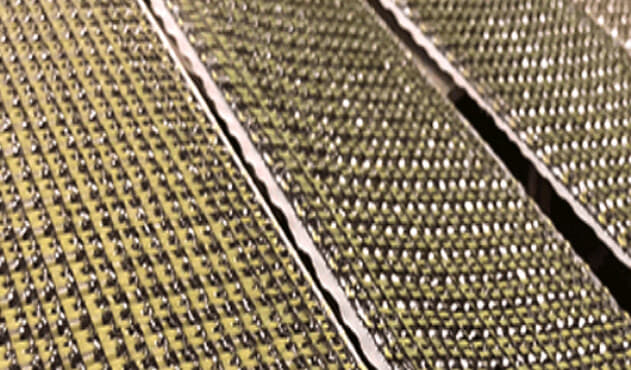
Acculevel uses carbon-fiber kevlar straps in combination with incredibly rigid epoxies to reinforce basement walls with stronger-than-steel strength. These epoxies are designed to bond the carbon fiber straps directly to the structure by permeating both the foundation and carbon-fiber. After application, both materials harden into a permanently bonded structure.
This combination of bricks in staggered columns and strap-reinforced rows creates a strong “grid” ideal for combating exterior soil pressure. A wall repaired with carbon fiber straps can be painted, leaving an almost invisible repair. You can learn more about this unique solution in our guide to carbon fiber straps.
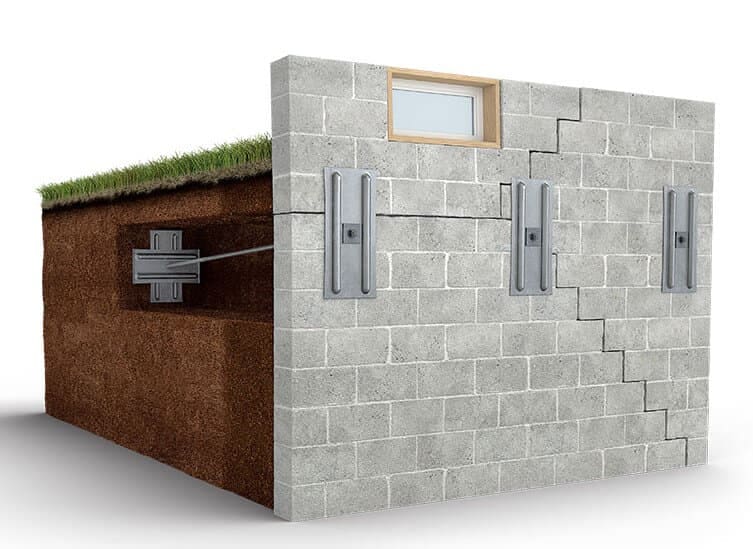
Wall anchors consist of a metal plate, a metal anchor that is buried in the yard, and a steel shaft that connects the two. This anchor system provides supplemental lateral force to stabilize bowed and cracked walls. Installation is quick, but does require some minimal excavation.
Helical tie-backs are long, screw-like shafts that are attached by a metal plate to the basement wall. Because they are installed down into undisturbed soil, they can provide lateral stability to a basement or retaining wall.

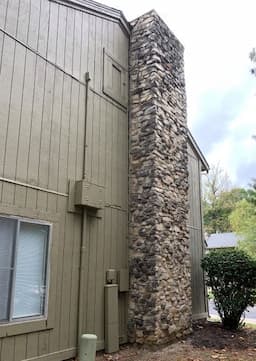
Your chimney is particuarly susceptible to uneven settling, for two reasons. First, a chimney is a very heavy feature, due to the weight of the brick or stone used to build it. Second, chimneys are usually built on a slab foundation that is separate from your home’s foundation.
This means any erosion that occurs around the chimney foundation is likely to cause it to settle at a different speed than the rest of your home. This difference in settling causes cracks and gaps to form around the chimney, letting in drafts and water.
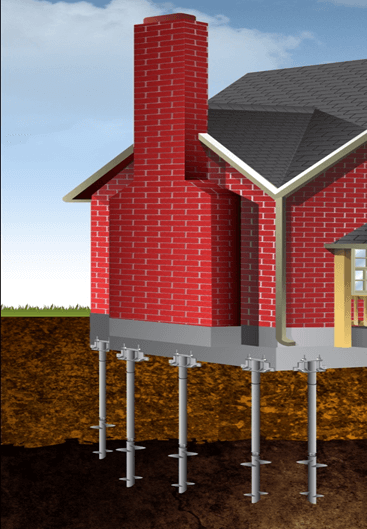
When a chimney pulls away from your home, it indicates that the chimney’s foundation is also separating from the rest of the home’s foundation. This uneven settling is best repaired by using helical piers.
Helical piers are long, screw-like shafts that can be drilled down to deep, stable soil. By leveraging the resulting resistance, the piers lift your foundation to a level state using heavy duty brackets.
All of our helical piers are included in Acculeve’s life-of-structure warranty.

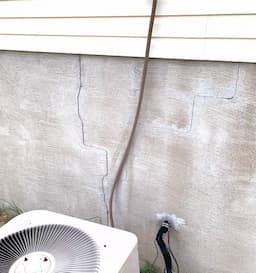
Are there cracks in your drywall? Do you have doors or windows that stick? Have you found cracks on the outside of your foundation? These are all indications of a foundation that is being damaged by uneven settling.
The most common causes of uneven settling are soil erosion and poor soil compaction. Our skilled team of professionals can diagnose the cause and provide a solution.
When the foundation is unlevel, your home’s structure is pulled in opposing directions. Building components like wooden beams and concrete walls are not designed to bend or stretch- so they begin to twist or warp.
As the wooden components of your home warp, they move the window and door frames. Once the frame shifts in place, it prevents your door or window from moving smoothly, and cracks the drywall.
To fix this uneven settling, you need to stabilize and support the portion of your foundation that is settling too quickly.
Helical piers are steel posts that hold your foundation stable and secure. Piers are screwed into the ground outside of your home until they reach stable, undisturbed soil.
Once installed to the proper depth, the piers are attached to the foundation with brackets. Want to know more about piers? We address homeowners’ most frequently asked questions about piers in this article.
Acculevel provides a life-of-structure warranty for helical pier installations.