
✕
What issue are you experiencing?
Cracks, water intrusion, crawl space moisture, settlement, etc.
Cracks, water intrusion, crawl space moisture, settlement, etc.
We Treat Your Home Like Our Own



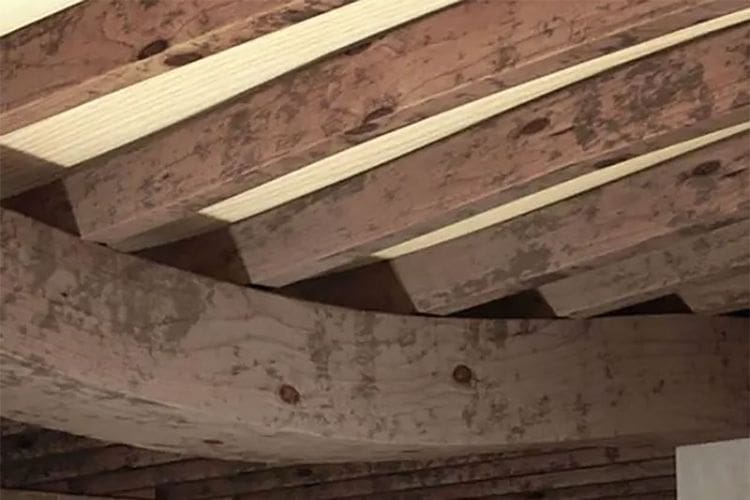
Water intrusion is one of the leading causes of structural issues because it seeps into the ground around your foundation, putting the sill plate, floor joists, and wood beams at risk. Because they often come into direct contact with concrete or exposed soil, they are especially vulnerable to rot, swelling, and decay caused by prolonged moisture exposure. Once weakened, the floor system fails, resulting in sagging and uneven surfaces.
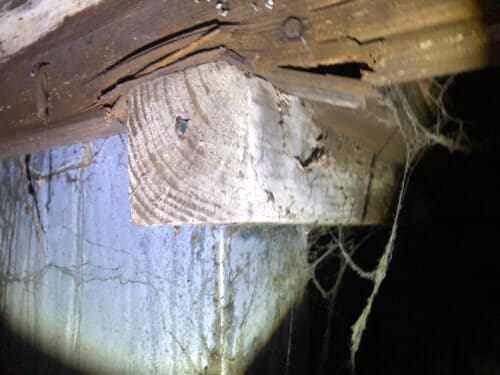
This floor joist is badly decayed, splintering around the beam. Floor joist in need of repair by an Acculevel Professional.
Even without standing water, high humidity levels can damage the beams, joists, and subfloor. Wood is porous and absorbs moisture from the air, leading to gradual weakening and rot. As the wood decays, it compresses under the weight of your home, often lowering the floor by several inches. In these cases, floor joist repair or beam reinforcement may be necessary to restore structural integrity.
Pests such as termites and powderpost beetles can wreak havoc on your home’s wood framing system. Termites, along with certain beetle species, bore into beams and joists, weakening the structure from within.
These insects lay eggs inside wooden supports, and infest your structural wooden flooring system, compromising its strength. This may require extensive structural wood repair to address the damage.
Human error is another possibility. Retrofits for plumbing, electrical, or HVAC systems sometimes lead to cut joists or notched beams. These modifications create weak points in the structure, increasing the risk of splitting, sagging, or even collapse. Identifying and reinforcing these areas through joist repairs and beam stabilization can prevent long-term structural issues.
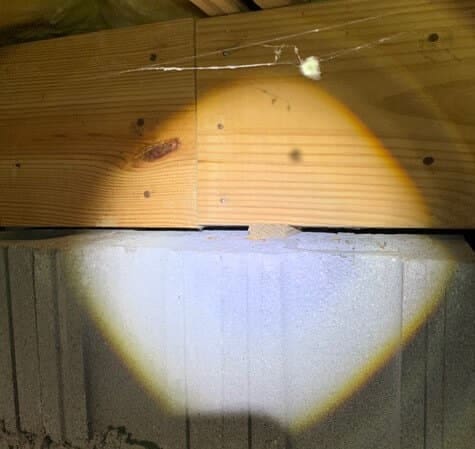
Older homes often lack modern structural standards, with support beams or posts spaced too far apart to effectively distribute weight. This can lead to stress fractures, sagging, and eventual failure. Homes built more than 50 years ago may also use outdated materials like wooden shims, which compress over time and cause uneven flooring. At Acculevel, we use steel shims and reinforced support systems to ensure lasting stability.
The wooden shim has compressed, lowering the joist. This picture was taken by an Acculevel Project Manager on a routine free estimate appointment.
Older homes, especially those built before the 1970s, often relied on untreated lumber and outdated construction methods, leaving them more vulnerable to water damage, rot, and insect infestations. Without modern pressure-treated wood or protective barriers, these structures are prone to deterioration over time.
In addition, modern renovations—such as installing granite countertops, stone tiles, or adding heavy fixtures like pool tables—can overload older floor joist systems that were not designed to support such weight. This strain can lead to sagging floors, cracked beams, and subfloor damage. In these cases, floor joist repair near you or subfloor reinforcement may be required to maintain stability and structural integrity.
If you’re experiencing uneven or sagging floors, rotted joists, or a compromised subfloor, it’s important to act promptly. Subfloor damage can result from excess moisture, mold growth, structural aging, pest infestations, or even improper installation during past renovations. These issues not only affect the integrity of your flooring but can also impact the overall safety and value of your home.
Whether you’re searching for subfloor repair near you, need help fixing squeaky floors, or require a full floor joist replacement, early detection and repair are key. A timely inspection can reveal hidden damage and prevent further deterioration, saving you from more extensive—and expensive—repairs down the line.
Contact Acculevel in Cedar Rapids, Iowa today for expert subfloor repair services. We provide free estimates and comprehensive solutions for floor joist reinforcement, moisture-related damage, and structural floor leveling. Our experienced team uses proven tools and techniques to restore stability and durability to your flooring system, giving you long-term peace of mind and a safer, stronger home.
Before beginning any sagging floor repair in Cedar Rapids, it’s crucial to comply with the city’s permitting requirements. According to the City of Cedar Rapids Building Services Department, most structural repairs — including floor joist repair, subfloor reinforcement, and foundation-related fixes — require formal plan submission and review.
Due to high demand, the city warns that permit approvals may take extra time. Additionally, any contractor performing floor repair in Cedar Rapids must be properly licensed by the State of Iowa to legally operate within city limits. To ensure your project meets all local codes, you can contact the City of Cedar Rapids Building Services directly: (319) 286-5831.
City Services Center
500 15th Ave SW
Cedar Rapids, IA 52404
By working with a professional like Acculevel, already experienced in floor and structural repair under Cedar Rapids regulations, you’ll gain peace of mind knowing your floor joist and subfloor repair project will be completed safely, efficiently, and 100% up to code.
If you’re dealing with uneven, sagging floors in Cedar Rapids, Acculevel is your trusted partner for sagging floor repair, floor joist reinforcement, and subfloor restoration.
If your home suffers from moisture damage, aging materials, or structural weakness, our team delivers lasting solutions that restore both strength and stability.
Contact us today for a free evaluation—and take the first step toward solid, level floors with Cedar Rapids’ floor repair experts.


Addressed water intrusion in Cynthia's basement by thoroughly waterproofing the vulnerable areas. We identified critical spots at the base of the walls where rain was seeping into the basement. By implementing a comprehensive drainage solution, we ensured effective management of rainwater, keeping the basement dry during heavy rains. This project is an important investment, with an approximate cost of $13,900.
Near Cedar Rapids, IA


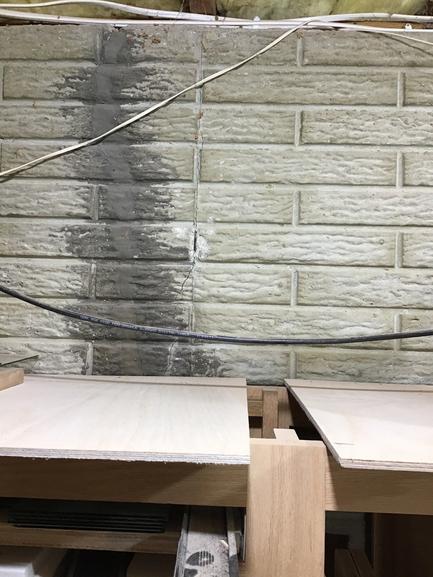
We've tackled a challenging project in Linda's basement, located in the 52411 area. The work involved addressing cracks and water intrusion issues in the foundation walls. Our team applied a comprehensive waterproofing solution to ensure a dry and secure space. This included sealing vulnerable areas and implementing protective barriers. The project, involving detailed effort and care, is valued at around $7,100.
Near Cedar Rapids, IA


We tackled a critical area in Logan's home located in the 52402 sector, dealing with water seeping through the basement floor in a split foyer setup. Our team installed an effective drainage system next to a window under a deck to redirect water flow and prevent further damage. This repair includes addressing mold found above the trim, securing the space efficiently. The total investment in these comprehensive repairs is approximately $7,505.
Near Cedar Rapids, IA