✕
What issue are you experiencing?
Cracks, water intrusion, crawl space moisture, settlement, etc.
Cracks, water intrusion, crawl space moisture, settlement, etc.
We Treat Your Home Like Our Own
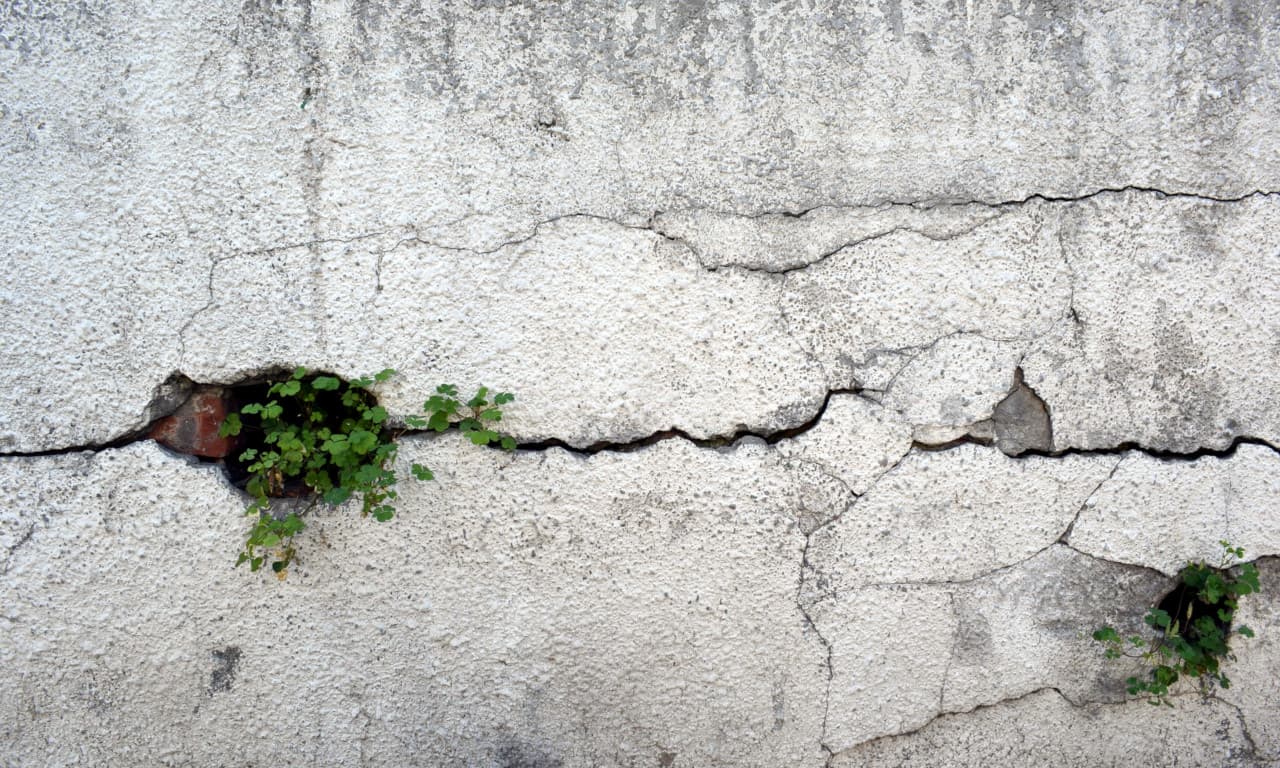



Acculevel was founded in 1996, and is well known in the industry for repairing foundations, basements, and crawl spaces. We raise and repair concrete structures for thousands of customers per year.
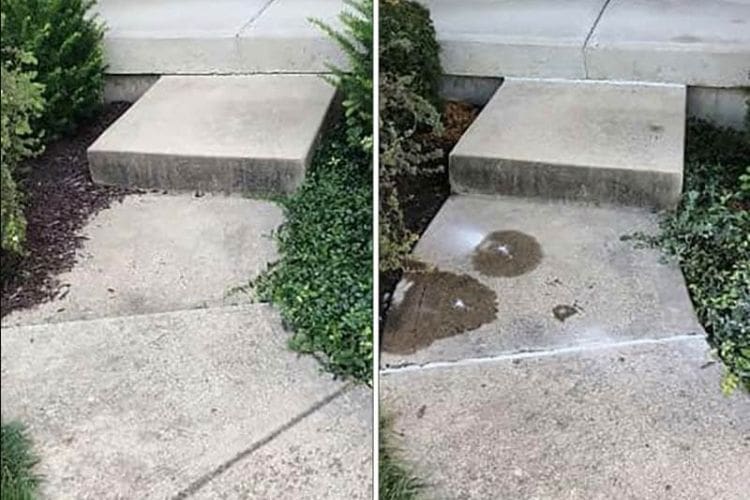

A concrete slab sinks as the soil underneath it shifts. Often, the cause for this is erosion. Rain comes down and saturates the ground, mixing the water into the soil. Then, when the water drains away, it takes part of the soil with it. This erosion can happen gradually as a natural process, or suddenly if it’s caused by a broken pipe or ruptured drain. If the ground under a slab is eroding quickly or seems loose, you should evaluate your home’s guttering and plumbing systems. It’s possible the downspouts or plumbing are draining under the slab and washing out the soil.
In other circumstances, the slab moves because of the ground itself. It’s possible that it wasn’t properly compacted before the concrete was poured. The extreme weather cycles in the Midwest contribute another factor. The ground floods in the spring, then dries out during a summer drought, which prompts erosion Then there’s the winter freeze-and-thaw pattern. The ground expands when it freezes, and contracts as it thaws. This fluctuation also contributes to shifts in the soil, which accelerates the settling process.
Concrete rarely settles evenly; usually one end will sink more significantly than the other. When this happens, the stress of the uneven support will sometimes crack the slab. At that point, you have high and low points on the concrete, and a crack or joint between slabs that will catch a pedestrian’s toe. These are trip hazards and a liability issue.
Sometimes, an uneven slab can also cause damage to your home. It may redirect rainwater towards your house, instead of away from it. This leads to water damage to your foundation, and possibly to leaks in your basement or crawl space. Over time this extra moisture can cause serious damage. Water permeating into your home can cause rotting in the structural wood flooring system (sill plate, floor joists, etc) and allow mold to flourish and grow.
Slab lifting is done by injection. Small holes are drilled through the concrete slab, and material is injected below it. This material fills the void underneath the concrete, and gradually the pressure of this filler being forced under the slab creates lift. The type of fill material varies; many companies use a concrete or limestone slurry referred to as “mud” and this process is generally called mudjacking. As the slurry hardens, it creates lift below the slab.
At Acculevel, we use a polyurethane foam. In our experience, slabjacking provides a better and more reliable repair; once the foam is injected, the chemical reaction promptly begins to expand, and it’s this foam that does the lifting. Since it’s more immediate than mudjacking, it allows for better control.
In this video, one of our knowledgeable experts explains why we choose to perform slabjacking:
Slabjacking uses specialized equipment, but it’s usually installed in a standard-sized service truck that can park in the driveway or street without issue. Slabjacking repair work rarely requires an Acculevel crew driving across your lawn, or disturbing your landscape; the slabjacking equipment has a 250 foot injection hose to maximize our reach to the repair section.
In fact, there is very little mess generated at a slabjacking job site. Generally, crews only need to clean up some dust generated from drilling through the concrete, and maybe trace amounts of foam from the injection site.
This is preferable to the messy process of replacing a slab. Concrete demolition often involves the use of a jack hammer, which is noisy and creates debris that adds to landfills. Re-pouring concrete requires building forms, a concrete truck, and the use of this equipment in close proximity to the work site. This results in a significant amount of trash and upheaval on your property. The new slab can also be visually jarring, as it won’t match the other existing sections in color or texture.
Slabjacking works with the existing concrete slab, so the costs are limited. They depend more on the size of the slab being lifted, and the amount of void under the slab. (The larger the gap, the more material is required.) The costs to replace concrete can be double the price of slabjacking. For more details on costs, please review our article on costs comparisons.



Addressed water intrusion issues in Kathy's basement by installing dependable structural supports and waterproofing measures. The space around the stairs had persistent water problems despite previous flood abatement efforts. Our team carefully reinforced the area and implemented effective drainage solutions. This project, located in the 46628 area, was valued at approximately $10,700, ensuring the basement remains dry and secure.
Near South Bend, IN


We addressed a significant issue of cracks and bowing in a concrete block basement. Our team applied a robust crack repair solution to reinforce the walls, ensuring long-term stability for the structure. The job, scheduled with the homeowner for about $5,600, was a crucial step in maintaining the property's integrity in the 46614 area.
Near South Bend, IN


In this project, we tackled moisture issues in the basement by implementing a waterproofing solution. The team installed a liner along the walls and sealed the perimeter to prevent any water intrusion. This comprehensive approach not only addresses existing issues but also enhances the basement's durability. The project cost was approximately $10,000, offering peace of mind and a dry, usable space.
Near South Bend, IN

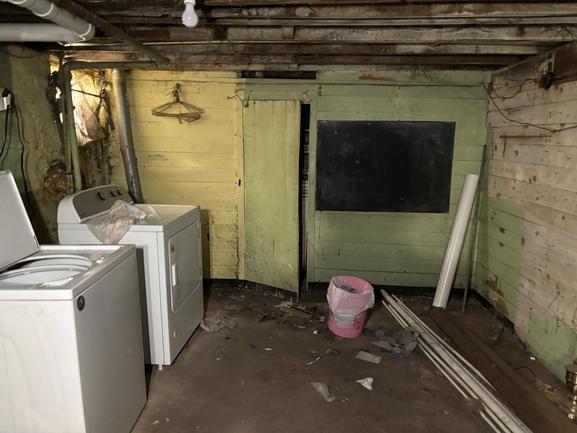
Dean's property showcased several structural issues that required addressing. We focused on reinforcing the foundation, ensuring that any visible cracks and sunken areas, especially near the back room and crawl space, were repaired. Proper underpinning and leveling techniques were employed, significantly stabilizing the structure. Approximately 11,000 dollars were invested in ensuring the home's integrity.
Near South Bend, IN


We tackled structural issues in Philip's basement in the 46614 area, focusing on foundation settling and water intrusion in a finished room. Given Philip's concerns about potential cracks and unlevel floors, our team assessed and initiated necessary repairs to address these problems. The job was completed for approximately $3,600, ensuring the foundation's stability and preventing further moisture issues.
Near South Bend, IN


Worked on repairing a foundation of a townhome suffering from sinking issues. The job involved stabilizing the external structure to prevent further damage. Located in the zip code 46617, this project addresses the urgent need for structural reinforcement. The estimated cost is around $66,000.
Near South Bend, IN


We recently conducted a waterproofing job that included addressing some minor water presence around the property. The work was done to ensure long-term protection against moisture intrusion and to enhance the property's structural safety. Skylar's home in the 46614 area received necessary treatments to prevent future water issues, all for an approximate cost of $6,100.
Near South Bend, IN


Addressing significant structural concerns at Kathy's home located in the 46601 area, we've begun work on a vital foundation repair project. The front of the house showed signs of separation in the brickwork, including noticeable cracks in the basement walls. Our team is focusing on reinforcing these areas to address issues of settling and restore proper alignment to windows and doors. The project is valued around $9,940, reflecting the extensive work required to stabilize the structure.
Near South Bend, IN

Addressed the structural concerns in a basement with new support beams, crucial for stabilizing the space in this unique historic home. The intervention aims to counteract sagging floors and prevent water intrusion, providing peace of mind for the homeowner. This service, costing around $11,500, ensures the foundation remains strong.
Near South Bend, IN