✕
What issue are you experiencing?
Cracks, water intrusion, crawl space moisture, settlement, etc.
Cracks, water intrusion, crawl space moisture, settlement, etc.
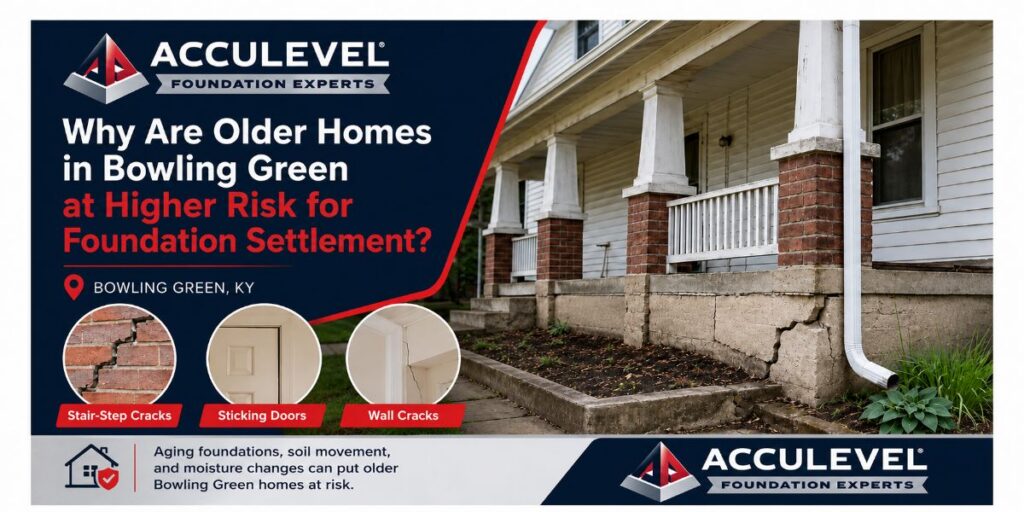
If you own an older home, foundation settlement can become a concern as the house responds to decades of shifting soil, heavy rain, humidity, drainage changes, and seasonal temperature swings.
Foundation settlement in Bowling Green, KY, usually develops slowly. Older homes may be more vulnerable due to aging drainage systems, mature trees, outdated materials, or construction methods common decades ago.
If you are starting to notice cracks, uneven floors, or other signs of movement, Acculevel in Bowling Green can help determine whether settlement, drainage issues, soil conditions, or age-related structural changes may be contributing to the problem.
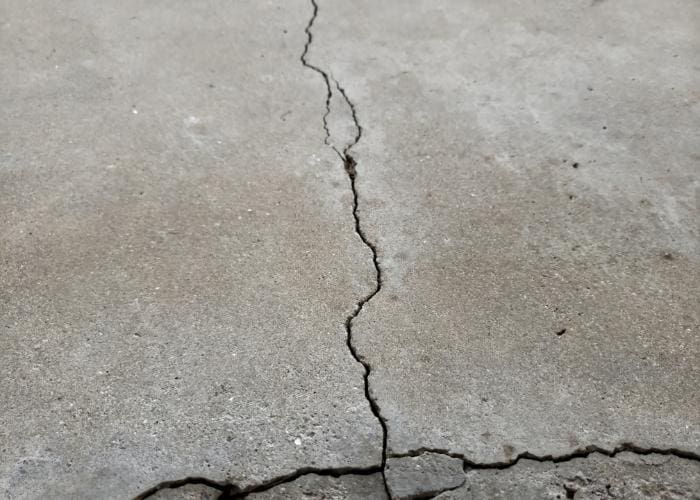
Older homes have had more time to experience soil movement, water exposure, drainage changes, renovations, and aging repairs. A foundation that was stable for years can begin to show signs of stress when gutters fail, nearby trees mature, grading shifts, or soil moisture becomes inconsistent.
Many older houses were also built before today’s drainage, waterproofing, and foundation standards became common. In Kentucky, this is especially relevant because 52% of the state’s housing stock was built before 1979, according to a Kentucky housing market analysis. Older homes are not automatically at risk, but decades of moisture changes, soil movement, and previous repairs can make foundation settlement more likely to appear over time.
In Kentucky, local rainfall, humidity, seasonal temperature changes, and soil conditions can add to that pressure. Foundation settlement in Bowling Green, KY, is usually not just an “old house problem.” It often comes from age combined with drainage issues, moisture changes, soil movement, and structural conditions
One of the biggest reasons older homes may settle is soil movement. Clay-heavy soils can expand when wet and shrink when dry. Over time, that cycle may reduce support under parts of a foundation, especially if water is not managed properly around the home.
The Natural Resources Conservation Service notes that soils with high shrink-swell potential can create severe limitations for homes with basements, which is why soil behavior matters when evaluating foundation risk.
Bowling Green locals may see problems after:
When soil becomes saturated, it can press against foundation walls or soften around footings. When it dries out, it may shrink away from the foundation, creating gaps. Older foundations that have already experienced decades of this movement may be more likely to show visible symptoms.
Drainage is another major factor. Even a small drainage issue can become more serious when it repeats year after year.
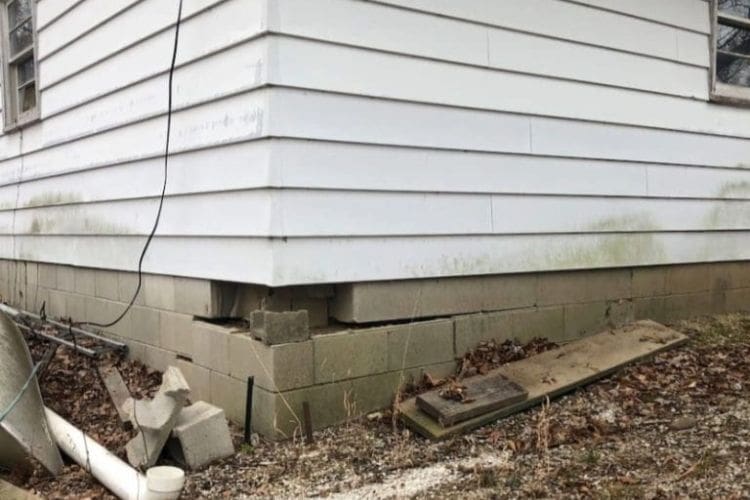
Foundation settlement in older homes in Bowling Green is not always obvious at first. Some signs may look like normal aging, but they can point to movement if they get worse or appear in several areas of the home.
Common warning signs include:
One small crack does not always mean the home has a major foundation issue. But if foundation cracks are growing, floors are shifting, or doors suddenly stop working correctly, it is worth paying closer attention.
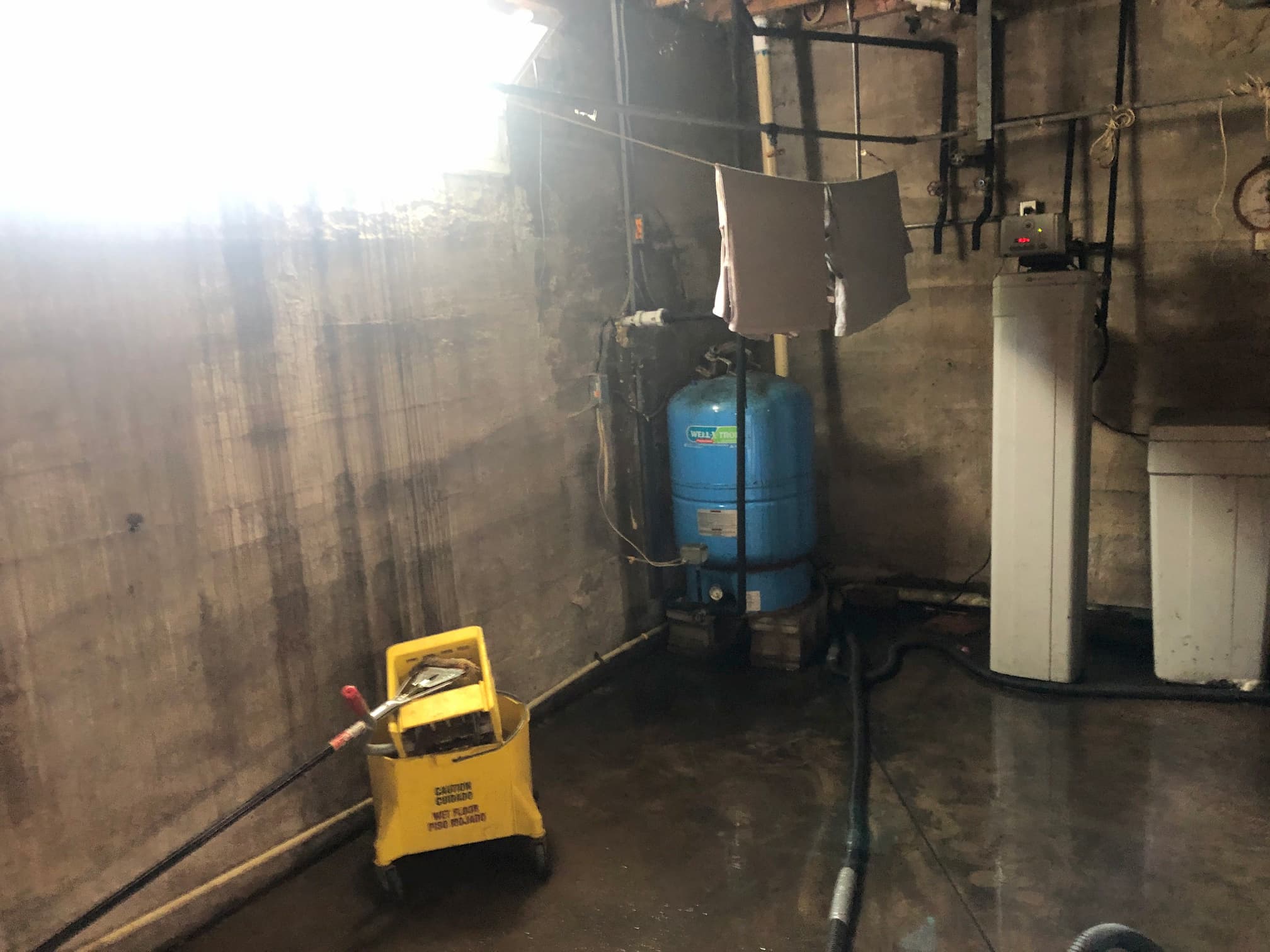
Older Bowling Green properties can also have more than one issue happening at the same time. You may notice basement moisture, crawl space humidity, uneven floors, and foundation cracks all at once. In that case, the concern may not be just settlement. It could involve drainage, wood damage, soil movement, or structural support problems.
A professional foundation inspection helps determine whether the symptoms are cosmetic, moisture-related, structural, or signs of active settlement.
During an evaluation, a foundation specialist may look at:
This matters because not every older home needs the same solution. Some homes may need drainage improvements. Others may need crawl space repairs, basement waterproofing, foundation stabilization, or a combination of services.
For example, if water is collecting near the foundation, correcting drainage may be part of the solution. If the foundation has dropped because soil no longer supports it properly, stabilization may be needed. If crawl space moisture has weakened wood supports, the floor system may need repair.
The goal is not to guess based on one visible crack. The goal is to understand what is causing the movement and whether it is likely to continue.
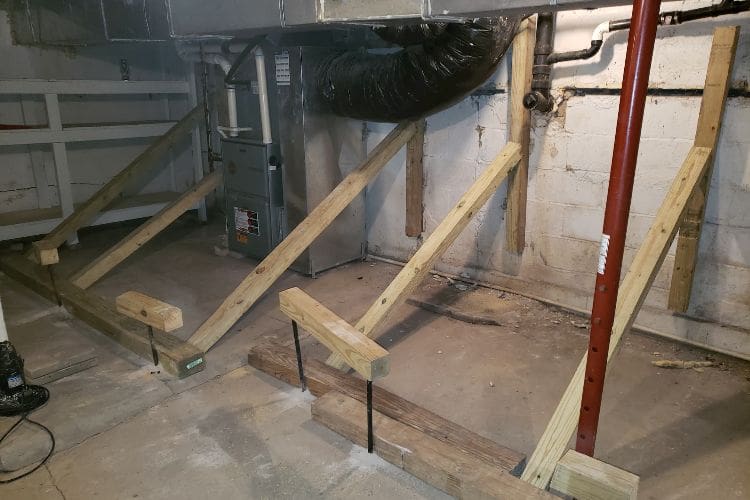
Foundation settlement becomes more concerning when signs are spreading, worsening, or affecting how the home functions.
A crack that has remained unchanged for years may be less urgent than one that appears suddenly or continues widening.
You should consider scheduling an inspection if you notice:
In older homes, it is especially important to watch for patterns. One symptom may not tell the full story, but several symptoms together can indicate a larger problem.
Because Bowling Green experiences seasonal rainfall and temperature fluctuations, you should also monitor issues after storms, during dry periods, and in winter weather.
The Kentucky Mesonet, operated by the Kentucky Climate Center at Western Kentucky University, provides weather and climate data for Kentucky communities, which can be useful context for understanding local moisture patterns.
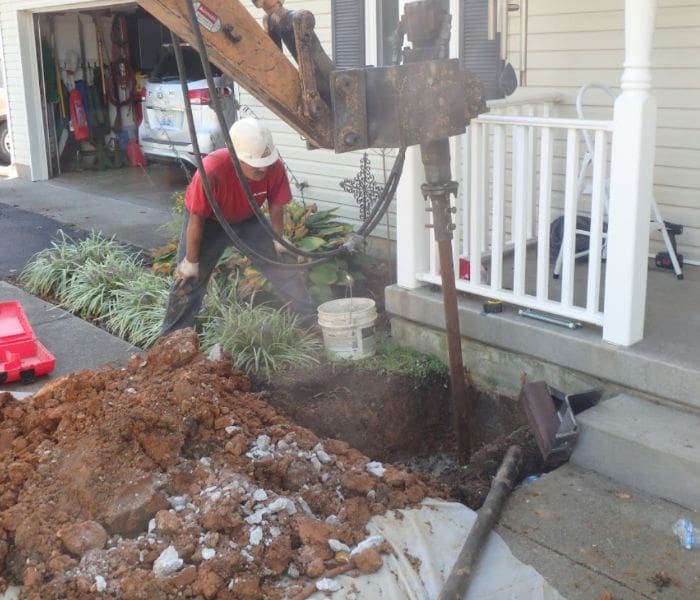
You can't control the age of your home or the soil it was built on, but you can reduce some risk by managing water and watching for changes.
Helpful steps include:
For older homes in Bowling Green, prevention often starts with drainage and moisture control. Keeping water away from the foundation helps limit soil expansion, erosion, and pressure against basement or crawl space walls.
Foundation settlement can affect homes of any age, so it is important to understand the cause before it gets worse.
If you notice cracks, uneven floors, sticking doors, water in the basement, or crawl space issues, our team at Acculevel can inspect your home, explain what is happening, and recommend the right repair options for long-term support.
Acculevel has been helping homeowners since 1996 with foundation repair, basement waterproofing, crawl space repair, and concrete leveling, providing a safer, more stable home for Kentucky residents.
Q: Is foundation settlement common in older homes?
Yes, older homes can be more likely to show settlement because they have been exposed to decades of soil movement, moisture changes, drainage issues, and structural aging. Not every older home has foundation problems, but age can make warning signs more likely to appear. The key is determining whether the movement is old and stable or active and worsening.
Q: What are the first signs of foundation settlement?
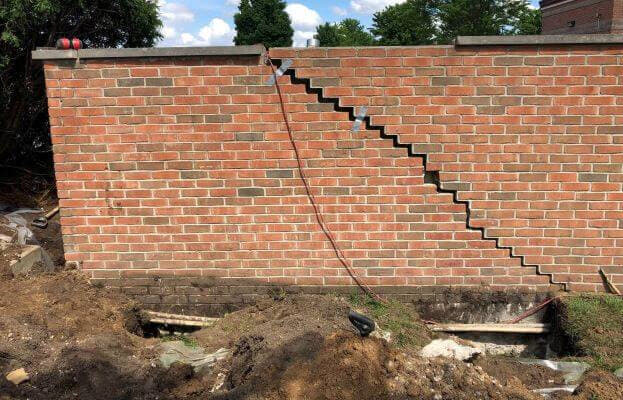
Early signs often include small wall cracks, sticking doors, uneven floors, or gaps around trim. In brick homes, stair-step cracks can be an important warning sign. Homeowners should monitor whether these issues change over time, especially after heavy rain, drought, or seasonal temperature swings.
Q: Can poor drainage cause foundation settlement?
Yes, poor drainage can contribute to foundation settlement. When water collects near the home, it can soften soil, increase pressure against foundation walls, or wash away supporting soil. In older Bowling Green homes, aging gutters, short downspouts, and settled grading can make drainage problems more common.
Q: Does every foundation crack mean serious settlement?
No. Some cracks are cosmetic or related to normal aging. However, cracks that widen, spread, leak, or appear with other symptoms like sloping floors or sticking doors should be inspected. A professional can help determine whether the crack is minor or part of a larger foundation issue.
Q: When should I call Acculevel for an inspection?
You should consider scheduling an inspection if you notice cracks getting larger, floors becoming uneven, doors or windows sticking, basement water, crawl space moisture, or multiple signs of movement at the same time. Acculevel can evaluate the home and explain whether foundation settlement, drainage, moisture, or structural support issues may be involved.