✕
What issue are you experiencing?
Cracks, water intrusion, crawl space moisture, settlement, etc.
Cracks, water intrusion, crawl space moisture, settlement, etc.
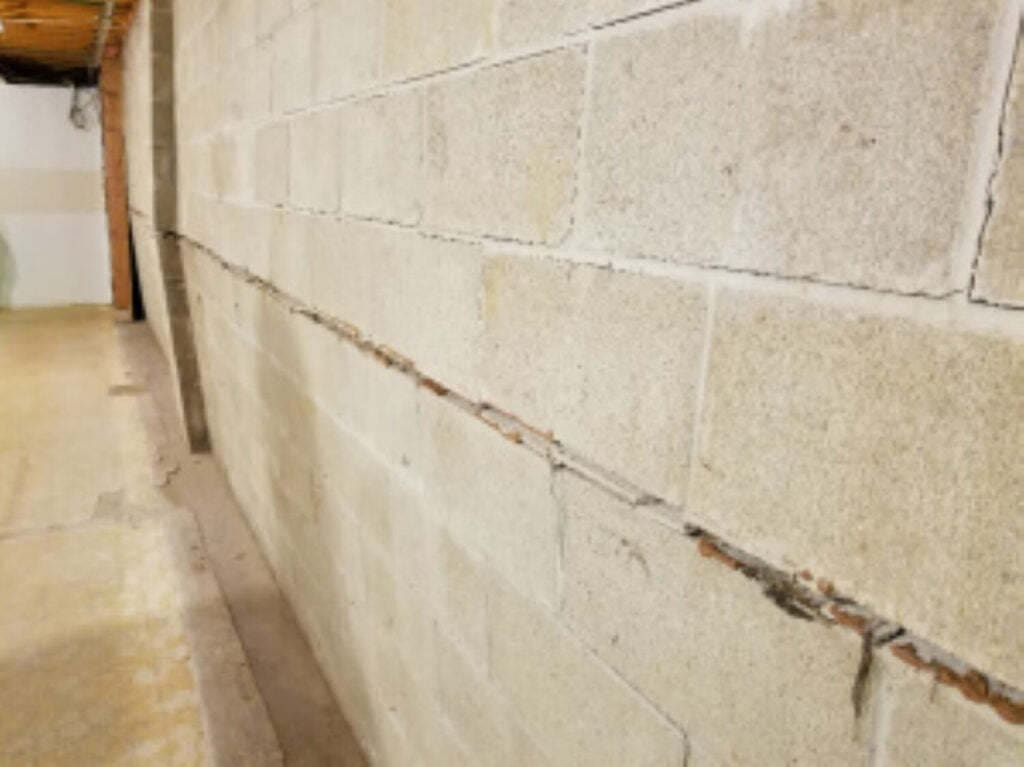
Homeowners often ask what causes a bowing basement wall or bulging basement wall. A bowed foundation wall or basement wall showing signs of bulging is often caused by hydrostatic pressure—water in the dirt outside the foundation pushing against the walls. This pressure can lead to cracks, shifting, or even collapse if left unaddressed. Prompt repairs are essential to protect your home’s stability. Here’s how:
Table of Contents
Now, I know what you’re thinking: “This is an article published by a foundation company! Of course they're going to pressure me to act fast! It’s in their best interest.”
And you’re not wrong.
But here’s a simple fact: I’m pressuring you to act quickly because it is also in your best interest. If you delay, the damages caused by a bowing foundation wall—or a basement wall bulging—can get bad very quickly, and the repair costs increase exponentially.
Early stages of a bowing foundation wall: stair-step cracks leads to a long horizontal crack.
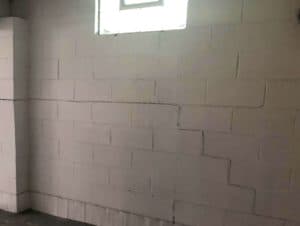 This picture was taken by an Acculevel project manager during a routine free estimate appointment.
Most of the time, a foundation wall bowing inward is caused by hydrostatic pressure. This pressure develops when the soil around your house is saturated with water. The soil expands and pushes against your foundation, creating stress that can lead to a bowed basement wall or even a bulging foundation wall over time.
In St. Louis, heavy rainfall and fluctuating soil conditions make foundation issues like these even more common. Left unaddressed, these problems can lead to cracks and moisture seepage, requiring professional basement leak repair in St. Louis to prevent further structural damage.
These conditions are common during snow melts and spring rains, but can also be caused by poor drainage around your house. If your downspouts are emptying rainwater too close to the home, or if you live in a high water table, you may need some basement water drainage in addition to wall repairs. We have a guide that reviews waterproofing in detail, if you'd like more information
Want a faster diagnosis? Check our Symptom Checker for more info.
The worst case scenario? Your wall collapses.
I know, I know—no one likes an alarmist, but a basement wall caving in or a bowed foundation wall will not fix itself. Nor can you trust it to hold fast against increasing external pressure. Left on its own, a damaged wall will deteriorate until it collapses. At that point, the structure of your house is compromised, and staying there could endanger your family.
You may have to move out until it’s rebuilt, which can take weeks or months, depending on the severity of the destruction. A collapsing basement wall bowing inward can split flooring, snap beams and joists, crack drywall, break water pipes—the potential damage is extensive and far-reaching.
Later stage foundation wall damage: shows a bowed basement wall with visible bulging
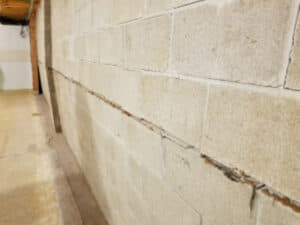 This picture was taken by an Acculevel project manager during a routine free estimate appointment.
The best case scenario is that you act quickly, which saves you money and stress.
If you address issues like a bowing basement wall or a foundation wall bowing inward early, you can often repair them using minimally invasive methods. However, if the damage gets worse—resulting in a basement wall bulging or even signs of caving in—repairs become more costly and disruptive. In some cases, concrete repair may also be necessary to reinforce weakened areas and ensure long-term stability. Acting promptly prevents catastrophic damage, protecting both your home’s structural integrity and your budget.
The important part is that you take action while it can still be repaired.
There are several ways to fix a bowing basement wall before it collapses. The best method for your home will depend on how extensive the damage is. If a wall is only cracked, or bowing less than 2 inches, carbon fiber straps are the ideal solutions. If the wall is bowing or bulging more significantly, you'll want to review wall anchors and helical tiebacks. We have a detailed guide to foundation repair here, that goes into greater depth.
Find an experienced local foundation company, and make an appointment. Before you sign a contract for any service, you should always verify the company is reputable, insured, and accredited by the Better Business Bureau.
If you live in Indiana or the surrounding states, contact Acculevel. Established in 1996, we specialize in foundation repairs and crawl space waterproofing. If you have noticed horizontal cracks in your basement, or you have a bowing wall, you can request a free estimate. An experienced project manager will evaluate your crawl space conditions and recommend the best course of action for you, to keep your home strong and healthy for years to come.
We have also created a free tool that any homeowner can use to see what could be causing problems in your home and how to fix it. Identify problems, explore solutions, and get advice on how and when to take action with our Symptom Checker.
[DISPLAY_ULTIMATE_SOCIAL_ICONS]