✕
What issue are you experiencing?
Cracks, water intrusion, crawl space moisture, settlement, etc.
Cracks, water intrusion, crawl space moisture, settlement, etc.
Your floor is supposed to be a smooth, even surface that is firm and steady beneath your feet. It is not supposed to have ridges like a potato chip. It should not offer a kid-friendly ski slope to one side, nor give way to you like memory foam insoles. And there is definitely not supposed to be a visible gap smiling at you between the baseboard trim and your flooring. If your floors are showing these signs, you might be in need of sagging floor repair near you. Don’t worry, we can fix all of those issues!
Our company specializes in sagging floor repair near you. Whether your floors are sagging, bowed, or uneven, we provide expert floor joist repair in Chicago, Illinois and surrounding areas. With years of experience, we are equipped to handle a wide range of structural floor problems. Contact us today to schedule your free estimate and learn what it will take to restore your flooring.
A sagging floor is a sign that the “bones” of your home are damaged or deteriorating. Addressing these issues early is essential to minimize repair costs and prevent further damage. In our experience, issues like warped or bowed floors often stem from problems with the subfloor, floor joists, or foundation.
At Acculevel, we’ve been repairing sagging floors, warped floors, bowed floors, and structural wood flooring systems since 1996. Our team also specializes in Chicago subfloor repair, ensuring that your floors are strong, even, and built to last.
Unlike homes with basements or crawl spaces, a slab floor is solid concrete with no structural wood flooring system. For homes with this type of floor, soft soil or bad compaction is almost always the culprit. Once the soil is compromised, the slab will shift, and this creates the sagging or sinking effect. Pressure from that shift will sometimes crack the slab itself, causing high and low places in the flooring. To fix this type of damage, you need concrete slab repairs.
For basements and crawl spaces, the range of potential issues is considerably larger. The support structure is primarily wooden, making it vulnerable to various problems. If you notice sagging floors, it’s often due to damage to the wooden beams and the need for floor joist repair to restore the structure's stability
Water is a probable suspect, as it seeps into the ground around your foundation. The sill plate, wood beams, and floor joists are all vulnerable to this; these wooden components on top of your foundation are the wood framing system that supports your floor. Because it has direct contact with the concrete and can be over the exposed soil line, it often falls victim to water intrusion. Once water intrudes and saturates the wood, this leads to deterioration. It’s this deterioration that causes the floor system to fail.
Floor joist repair needed due to severe decay and splintering around the beam.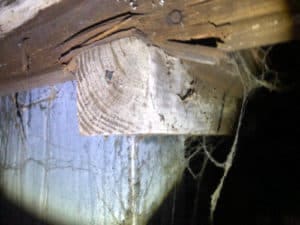 This picture was taken by an Acculevel Project Manager on a routine free estimate appointment.
You don’t need standing water under your house for structural decay to occur. High humidity can damage the beams and joists that support your subfloor. Wood is highly porous and absorbs water from the air. Over time, this saturation weakens and rots the wood. As the boards decay, they compress under the weight of your home, potentially lowering your floor by several inches.
Insects are another frequent cause of damage; termites are well-known culprits, but several beetle species also attack wood. Powderpost beetles, for example, are common and difficult to detect. These tiny invaders, often smaller than a grain of rice, lay eggs inside wooden beams. When the larvae hatch, they consume the wood from within, leaving your structural wooden flooring system weakened. Both termites and beetles can cause significant damage to floor joists and other wooden components.
Human error is another potential source of sagging floors, especially in homes retrofitted with updated plumbing, electrical, or HVAC systems. Contractors may cut or notch floor joists or even the main support beam to accommodate new pipes or vents, creating weak spots in the structure that can eventually crack or split.
The age of your home and outdated building codes can also play a role. A main support beam must be appropriately sized and supported at regular intervals, but older homes may lack these standards. In some cases, support beams or posts are spaced too far apart, putting extra stress on the structure and increasing the risk of sagging or failure.
Similarly, homes built more than 50 years ago may have been constructed with inadequate materials. Wooden shims, often used to level beams or joists, compress over time and cause uneven flooring. At Acculevel, we use durable steel shims to provide lasting support, prevent compression, and evenly distribute the weight of your home.
The wooden shim has compressed, lowering the joist.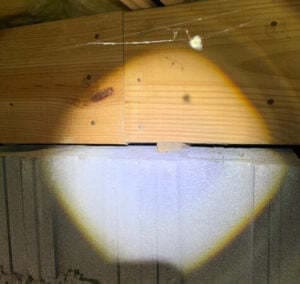 Photo taken by an Acculevel Project Manager on a routine free estimate appointment.
Outdated technology and materials can exacerbate structural issues. Before the 1970s, pretreated or pressure-treated lumber was not widely used. Raw lumber is more vulnerable to water and insect damage, leading to weakened floor joists and subfloors.
Additionally, modern renovations can unintentionally stress older homes. Heavy materials like granite countertops, stone tiles, or recreational items like pool tables or hot tubs can add significant weight to your floor system. If the structure was not built to handle these loads, it can quickly lead to sagging or damage.
If you’re dealing with sagging floors, compromised joists, or an aging subfloor, it’s time to take action. As discussed, issues like humidity, insects, human error, outdated materials, and heavy renovations can weaken your flooring system. Whether you need subfloor repair nearby or a complete solution for sagging floor repair, addressing the problem early can save you time and money.
Contact Acculevel in Chicago, IL today! We provide free estimates on subfloor repair near you, as well as expert solutions for sagging floor repair and floor joist repair. Contact us and let our team restore the stability of your home and give you peace of mind.



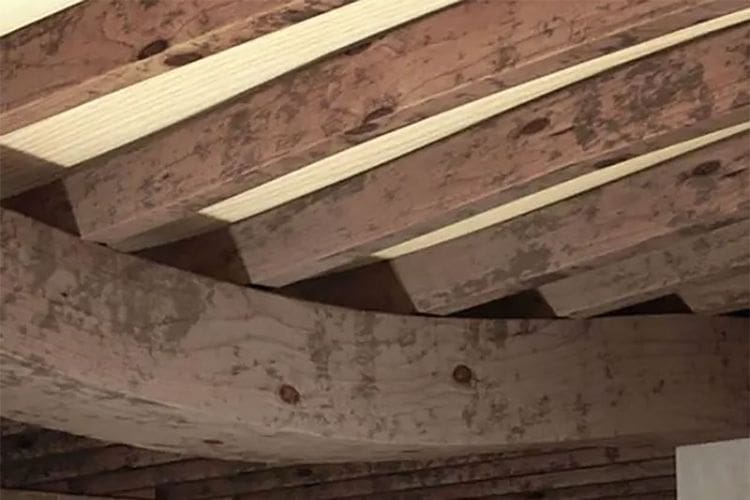
Unlike homes with basements or crawl spaces, a slab floor is solid concrete with no structural wood flooring system. For homes with this type of floor, soft soil or bad compaction is almost always the culprit. Once the soil is compromised, the slab will shift, and this creates the sagging or sinking effect. Pressure from that shift will sometimes crack the slab itself, causing high and low places in the flooring. To fix this type of damage, you need concrete slab repairs.
Water is a probable suspect, as it seeps into the ground around your foundation. The sill plate, wood beams, and floor joists are all vulnerable to this; these wooden components on top of your foundation are the wood framing system that supports your floor. Because it has direct contact with the concrete and can be over the exposed soil line, it often falls victim to water intrusion. Once water intrudes and saturates the wood, this leads to deterioration. It’s this deterioration that causes the floor system to fail.
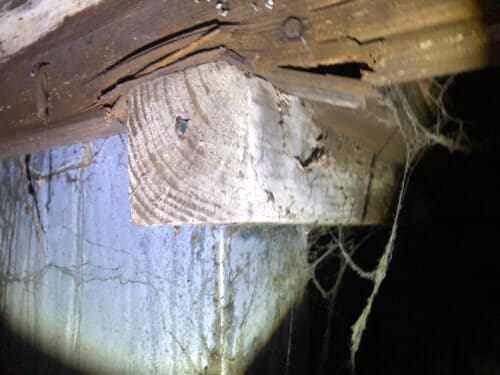
But you don’t have to have standing water under your house to cause structural decay. High humidity can also damage the beams and joists that hold up your subfloor. Wood is highly porous and readily absorbs water from the air. Over time, this water saturation softens and rots the boards. As they decay, they compress under the weight of your home, lowering your floor sometimes by several inches.
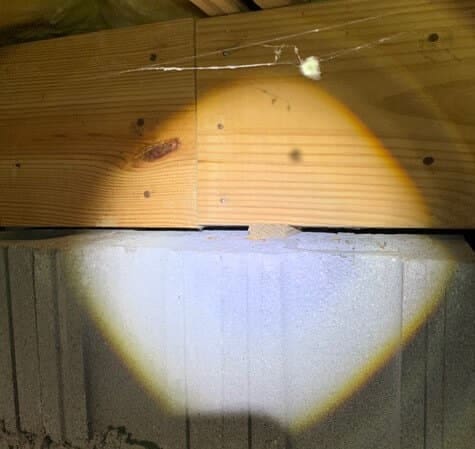
Lack of building codes- or outdated ones- are another concern. A main support beam, the post that spans the length of your home, should be sized proportionately and supported every few feet. In many homes, the beams may not be the correct size or the support posts are installed too far apart. This over-spanning puts greater stress on the beam and makes it more likely to sag and potentially even fail.
Along the same lines, if your home is more than 50 years old, it’s also possible that inadequate materials are to blame. When a home is built, sometimes the beams or joists are not the correct dimensions. When this happens, a contractor will install a shim; a shim is a thin piece that adds a minimal lift to ‘even out’ the installation. Many times in construction, that shim was usually another piece of wood; at Acculevel we use steel shims to prevent compression or rot. These shims also allow us to increase the overall surface of the bearing load, so that the beam it’s supporting is not crushed by the weight of your home.
Technology is another age-related factor. New solutions and materials are always in development, but they take time to become commonplace. Before the 1970s, pretreated or pressure-treated lumber was not widely available or regularly used by builders. Lumber installed in its original ‘raw’ form is more vulnerable to insects and water damage.
New trends in home design can have a negative effect if a remodel doesn’t take the weight of the raw materials into account. Many older homes aren’t built to carry the load of solid granite countertops or stone-tiled floors and walls. Recreational items like a pool table or hot tub will also add significant weight to your floor system. These are all items that can put additional stress onto an already failing wood structure.
Contact Acculevel! We provide free estimates on sagging floor repairs.
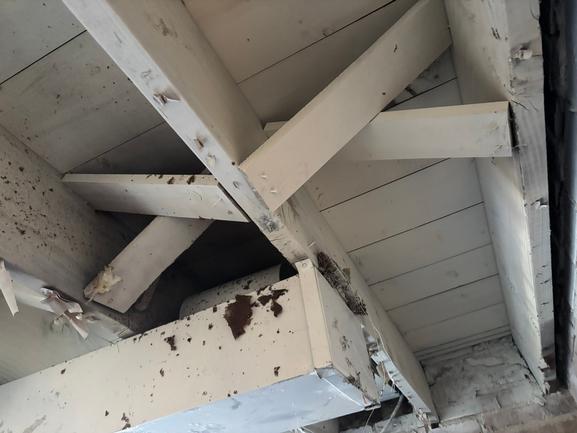
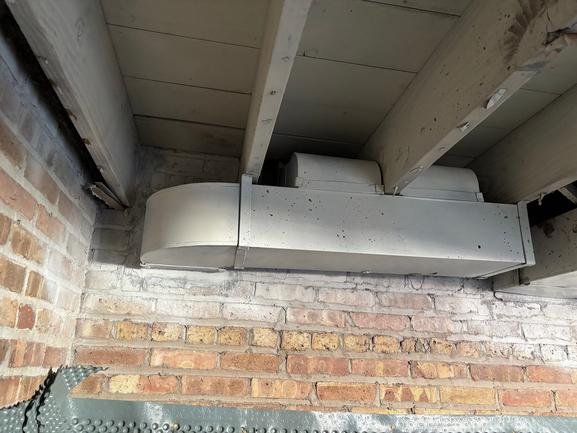
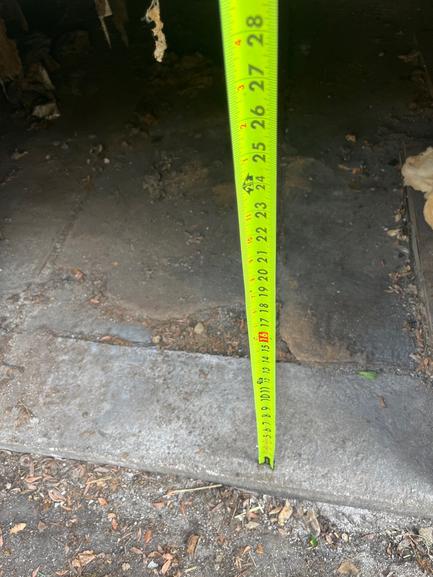
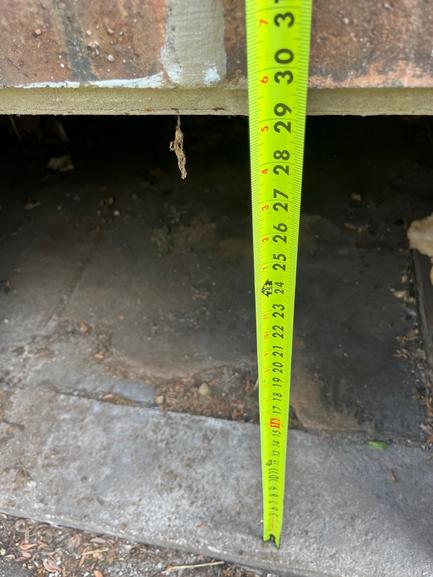
Just finished encapsulating a small crawl space with thorough moisture control measures. We installed insulation to keep the area dry and protect structural integrity. The crawl space, despite being over 18 inches high, was quite compact, requiring careful installation. Elizabeth can now enjoy a stable foundation with this waterproofing solution in the 60645 area. The project was valued at around $5,200.
Near Chicago, IL


Completed a support installation in an older home with unlevel floors. The main beam was reinforced to restore stability, addressing the homeowner's concerns effectively. This structural repair is valued at just over $11,000 and took place in the 60626 zip code.
Near Chicago, IL


Conducted a slabjacking job on the sidewalk in front of a building in zip code 60638. Our team skillfully leveled the slabs to ensure a safe, even surface for pedestrians. This vital work, approximately priced at $2,300, enhances both the function and aesthetics of the pathway.
Near Chicago, IL


We've been working on waterproofing the basement for Raul in zip code 60638. The walls showed signs of water intrusion and some cracking, coupled with a noticeable musty smell. To address this, we installed a comprehensive waterproofing system along the basement walls and sealed the cracks to prevent future issues, all for an approximate cost of $5,857. Ensuring a dry and secure space was our priority.
Near Chicago, IL


Today, we completed a small repair job for Rachel in zip code 60613. We addressed three feet of hairline cracks in the basement wall, ensuring they're effectively sealed and protected from potential water damage. The project was efficiently managed and fully completed for just under $300. With these reinforcements, Rachel's basement remains safe and secure.
Near Chicago, IL


We've addressed persistent water intrusion issues for Michael's historic brick home, built around 1934, by sealing cracks located under the stairs. These cracks, one near the cove joint and another higher up the wall, had previously been attempted twice by other services but the problem persisted. Our solution focuses on achieving a dry, stable environment without needing to remove the stairs, with the project costing approximately $4,700. This work ensures long-term protection and peace of mind in zip code 60646.
Near Chicago, IL


We're addressing vertical and diagonal hairline cracks in Rachel's basement, affecting previously repaired areas. The goal is to prevent further cracking and ensure the basement's ongoing stability. Our solution aims to provide a durable fix, as Rachel prepares to enhance her basement's condition, with a project cost of approximately $5,000.
Near Chicago, IL


Completed a structure repair project for Edgar in zip code 60638. The home was experiencing sagging walls and unlevel floors, prominently in the living room and connected areas. We implemented new support beams in the crawlspace to stabilize and level these critical areas. This foundation work was crucial to prevent further structural decline and was completed with an approximate cost of $10,671.
Near Chicago, IL


Just wrapped up a foundation repair project for Andre in zip code 60644. The job involved addressing structural issues that were compromising the stability of the building. By sealing cracks and reinforcing the foundation, we ensured long-term durability and protection against potential water intrusion. This repair came to an approximate cost of $3,500.
Near Chicago, IL