✕
What issue are you experiencing?
Cracks, water intrusion, crawl space moisture, settlement, etc.
Cracks, water intrusion, crawl space moisture, settlement, etc.
Some items are easier to buy than others. We know what criteria to use when we buy shoes- fit, comfort, color, etc. Buying food is usually pretty easy, also; you want to check produce for bruises, dairy for expiration dates, seafood that does not smell like dead fish… But what are the rules for buying a home? What should you watch for? How do you know if the seller is following disclosure laws, or if they’re trying to hide issues?
There’s a long, long list of things to consider when you’re house hunting. As an experienced and well-established foundation repair company, we are often asked to evaluate homes before a buyer makes an offer. These potential homeowners want us to assess foundation cracks, damp basements, sagging floors, or smelly crawl spaces. These are all signs of serious foundation problems and should be discussed with a seller before a deal is made.
But this is hard to do in today’s market- many homes sell within a few days. And there’s always the chance that you’ll fall in love with a place before you find out it’s not a good bargain. To help with these situations, we’ve developed a quick guide of things to watch for when you first tour a potential new home.
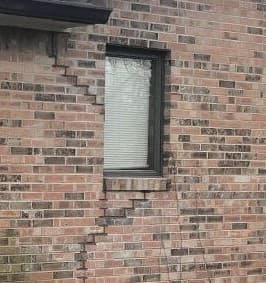
I feel a bit like Captain Obvious here, but look closely at the foundation walls. Do you see any cracks? If the house has a brick exterior, does the mortar look solid or is it crumbling? Fresh mortar or caulking, new/added trim boards can all indicate repairs; this is something you’ll want to discuss with the seller. If they had the repairs done by a professional company, they should be able to provide a receipt that includes details of the repair and what sort of warranty is offered (and if it transfers to the new homeowners).
You should also take a good look at the guttering, downspouts, and slope of the ground around the home. If water has been allowed to collect around the foundation, it may have eroded the ground under the foundation. It may also be seeping into the basement or crawl space. Acculevel recommends that downspouts be extended to at least 10 feet from a foundation.
Also take a close look at the sidewalks, patio, and other concrete slabs around the property. If they are cracked, they’re no longer properly sloped to drain away from the house or garage foundation.
This photo was taken by an Acculevel project manager during a routine estimate appointment. The cracks around the window are a sign the foundation is settling.
Many people will repaint a home before they put it on the market. This is a reasonable thing to do- it’s an easy way to brighten up a space, and it gets rid of the scuffs and dings that develop over time.
But sometimes, people do this to disguise drywall cracks. Cracks in the drywall- especially around door and window frames- are a sign of foundation settling. There are other signs you can look for:
This one can be obvious- if the flooring feels soft, bouncy, or shifts beneath your feet, you know there’s an issue. But sometimes, it can be more gradual.
Your personal comfort level is going to determine how thoroughly you examine the home’s crawl space. Millions of people are claustrophobic, so if you can’t go into the crawl space, that’s understandable. But you don’t have to enter it, to gauge the overall quality.
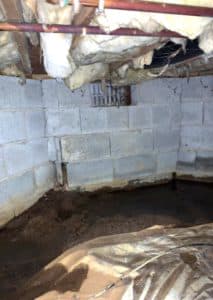 This photo was taken by an Acculevel project manager during a routine estimate appointment. The vapor barrier doesn’t cover all of the crawl space floor, there is water pooling around the edges, and insulation is falling out of the ceiling.
Start with the section above- if you’re going to get into a wet crawl space, a little warning goes a long way!
A basement is certainly easier to evaluate than a crawl space! But you are going to be checking for some of the same potential warning signs.
If you find any of these warning signs, the best thing to do is to ask the seller about having a foundation expert evaluate the home. If possible, make the appointment yourself, and meet the contractor at the site. This guarantees that you will be the person given the estimate- including the expected repair costs. From there, you can negotiate a selling price that reflects this expense.
Before signing any contract, we urge you to always verify the company is reputable, insured, and accredited by the Better Business Bureau. If you live in our service area, please call us. Acculevel is a family-owned company that uses American-made products whenever possible. We offer free estimates to all our customers, and we do not use high pressure or “hard sell” techniques. All of the services we provide are performed by our own employees; we do not use subcontractors on any of our job sites.
Want to do some additional research before scheduling an appointment? Please check out our Foundation Repair Guide. You can read the entire document, just the chapter(s) that interest you, or even bookmark it for later reference.

[DISPLAY_ULTIMATE_SOCIAL_ICONS]